Uyaphi.com
African Safaris and Tours


Hwange National Park is home to a wide range of other wildlife species including but not limited to; Wild Dog, Sable Antelope, Zebra, Eland, Kudu and Waterbuck, bad-tempered Buffalo, huge Elephant population, Lion and Leopard as well as some of the best birding in Southern Africa has to offer.
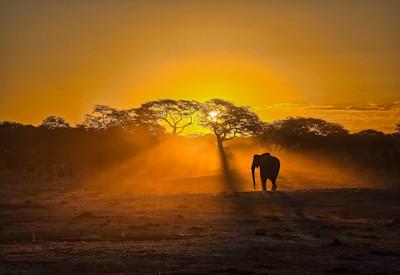
The game drives, the sunsets, those cold winter mornings and hot summer days, those massive herds of elephants, lion and leopard sightings, or simply spending a few hours at a waterhole. This is a Hwange safari, a must-visit for all that safari in Zimbabwe; there is no other place quite like it on the planet.
Hwange National Park is a 3–4 hour drive from Victoria Falls, with the main entrance gate near the small village of Dete; you can also fly in, although that option costs more. Dawn and dusk game drives, walking safaris and observation platforms near water holes provide unforgettable scenes of the natural world in its wild state.
If someone ever told you that Hwange was the best National Park in Southern Africa, they would not be far wrong. The Hwange region of Zimbabwe is utterly amazing and so well worth the effort of getting here.
The Hwange National Park is home to a variety of safari lodges and safari camps, each offering its own unique experience to visitors. The more luxurious lodge options can be found within the park within their own private wildlife concessions, whereas the more budget-friendly lodge options are located just outside on privately owned land.
Whether one is staying inside or outside the park, there is virtually no difference in terms of wildlife sightings while on Hwange safari as both options offer access to game drives within the boundaries of Hwange. Your choice of lodges comes down to budget and expectations, family-friendly, honeymoon and small group options are also available.
Here on this page, we offer guests lodges and safari camps that offer the best Hwange has to offer stretching across most budgets and eco-locations.

Rates from US$ 500.00 Per person per night
Bomani Tented Lodge sits on its own 5000-acre private reserve right on the edge of Hwange National Park, and it makes full use of the space. You can head out on a game drive, walk with an armed guide, or ride, which is still the quietest way I know to get close to plains game. Come in summer and the birding is superb, with the bush green and the migrants back. It suits families and couples equally well, and the welcome is warm without ever being fussy.

Rates from US$ 445.00 Per person per night
Bumbusi Wilderness Camp is built of stone and thatch in the rocky north of Hwange National Park, a part of the park that sees far fewer vehicles than the south. The chalets sit low in the landscape, so you notice the view long before you notice the buildings. This is walking country, and Bumbusi's guides make the most of it, taking guests out on foot to read the ground and approach game the old-fashioned way. It's a camp for people who came for the bush rather than the bar.

Rates from US$ 565.00 Per person per night
Camelthorn Lodge takes its name from the camelthorn woodland it stands in, just outside Hwange National Park on the edge of the Ngamo Plains. It's a lovely setting and one of my favourites in this corner of Zimbabwe. Two things set it apart. The first is riding: a Hwange horseback safari puts you among the plains game with no engine noise at all. The second is the pump run, an all-day game drive deep into the park, and as good a day out in Hwange as you'll find anywhere.

Rates from US$ 850.00 Per person per night
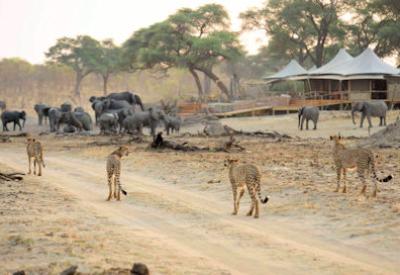
Camp Chitubu is a tented camp inside Hwange National Park, run with a light environmental touch and a real sense of place. The tented suites look out over wild country, and the game drives head towards Mandavu Dam, where elephants gather in numbers that are hard to believe until you see them for yourself. Keep your eyes open on the way. African wild dog move through this area, and a sighting of a hunting pack is the kind of thing that makes a whole trip.

Rates from US$ 590.00 Per person per night
Camp Hwange sits on a private concession in the Sinamatella area of Hwange National Park, some of the finest wildlife country in southern Africa. The camp overlooks a waterhole that never seems to have an off hour, and elephants and a steady stream of other game come in to drink whatever the season. Guides here walk as well as drive, which in the broken Sinamatella hills is a real treat. For serious safari travellers, this is one of the first camps we suggest in Hwange.

Rates from US$ 625.00 Per person per night
Daka Plains Camp is a tented camp inside Hwange National Park, with well-furnished suites and plenty of privacy between them. The real point of it, though, is what happens outside the tent. Days are split between game drives and guided walks, and night drives show you the side of Hwange most visitors never see, once the nocturnal animals start moving. It's a fine choice for travellers who want proper safari time and a comfortable bed at the end of it.

Rates from US$ 633.00 Per person per night
Davisons Camp is a classic tented camp in the Linkwasha Concession, in the south-east of Hwange National Park, where the game is at its densest in the dry season. The camp has a front-row seat on a busy waterhole that stays active day and night, with elephant herds coming in through the dry months and superb birdlife around the water. The name has history too: it's shared with Ted Davison, the warden who first pumped water to Hwange's pans. Few camps show you so clearly how this park works.

Rates from US$ 634.00 Per person per night
Deteema Springs Camp sits right beside Deteema Dam in the north of Hwange National Park, and the view from camp is mostly elephants. They come down to drink in family groups through the day, with plenty of other game in between. The real draw, though, is walking. Deteema's guides are licensed to walk armed, and exploring this rocky northern country on foot, with an expert reading the ground ahead of you, is one of the finest walking safaris in Zimbabwe.

Rates from US$ 650.00 Per person per night
Khulu Bush Camp stands on the edge of Hwange National Park, with exclusive safari suites and service that feels personal from the first evening. Game drives head into the park, so you get Hwange's wildlife by day and a calm, friendly camp to come back to at night. The campfire is where the day gets retold, usually at length and with some embellishment. It's a very easy camp to like, and a relaxed way into one of Zimbabwe's great parks.

Rates from US$ 842.00 Per person per night
Wilderness Linkwasha Camp lies in the south-east of Hwange National Park, in the open plains country where the park's game gathers most thickly in the dry season. It's a beautifully designed camp that never lets the design upstage the setting. Mornings are for long game drives across the plains, afternoons for doing very little in great comfort, and evenings for a drink under an enormous sky. It's one of the finest camps in Hwange, and one we recommend without hesitation.

Rates from US$ 774.00 Per person per night
Little Makalolo is a six-tent camp inside Hwange National Park, and it feels about as remote as anywhere in the park. It stands on raised ground above the Makalolo Plains, so the view runs a long way and you often spot game well before it reaches camp. The design is thoughtful and the comfort genuine, but the real luxury here is solitude. For travellers who prefer a small camp and a quiet evening to a busy lodge, Little Makalolo is very hard to beat.

Rates from US$ 445.00 Per person per night
Hideaways Nantwich Lodge sits in the north-west of Hwange National Park, run with an eye on its environmental footprint and a comfortable, unfussy style that suits the bush around it. Game drives explore this quieter side of the park, and guided bush walks slow everything down, so you notice the tracks, birds and small things that get missed from a vehicle. It's a good base for travellers who like their comforts but came for the wilderness, well away from the busier corners of Hwange.

Rates from US$ 565.00 Per person per night
Nehimba Lodge sits on its own private concession inside Hwange National Park, and the wildlife and birding here stay strong right through the year. Evenings are the highlight. The lodge overlooks a waterhole that Hwange's elephants use heavily, and as the light fades the herds come in close, sometimes remarkably close. Sitting quietly with a drink while they drink too is one of the best evenings you can spend in Zimbabwe, and exactly why we send guests here.

Rates from US$ 680.00 Per person per night
Somalisa Acacia is the small sister of Somalisa Camp, with just four tented suites inside Hwange National Park. That size makes it a natural fit for families and for groups who want the camp to themselves. Days follow a proper safari rhythm of game drives, guided walks and quiet hours by the elephant pool, watching the herds come in to drink. Intimate, relaxed and properly wild, it's a lovely way to see Hwange with the people you came with.

Rates from US$ 680.00 Per person per night
Somalisa Camp is the flagship of the three Somalisa camps in Hwange National Park, and it earns the title. The tented suites are stylish and comfortable, the pool is a gift in the heat of the day, and the deck looks straight onto the water where the elephants come to drink. It strikes that difficult balance between real luxury and a proper bush-camp feel. If you want Hwange's wildlife with a very high standard of comfort, this is one of the best places to have it.

Rates from US$ 530.00 Per person per night
Somalisa Expeditions is the lighter of the three Somalisa camps: six tented suites, a lower rate, and the same guiding team and the same country to explore. It looks out across a floodplain to a lively waterhole, so there's nearly always something to watch between drives. Comfort and service are still very good, but the feel is closer to a traditional safari camp. It's a smart choice for travellers who want Somalisa's guiding and wildlife at a gentler price.

Rates from US$ 445.00 Per person per night
The Hide sits in Hwange National Park and caters equally well to couples, families and anyone who simply wants a very comfortable safari. Its photographic hides bring you close to the animals, for pictures you'd never get from the seat of a vehicle. For the more adventurous, a bush sleep-out under the Hwange sky is the kind of night that stays with you. The service is polished throughout, and it adds up to one of the most complete safari stays in the park.

Rates from US$ 718.00 Per person per night
Verney's Camp sits on a private concession in a remote corner of Hwange National Park that few visitors ever reach. The luxury tents look out over open plains, and the quiet is the first thing guests notice. There's real comfort and charm here, but the wilderness sets the tone rather than the furnishings. Long game drives, unhurried sundowners and nights full of bush sounds make it a wonderful choice for travellers who want Hwange at its most untouched.
Both work, and the game viewing differs very little. Camps on private concessions inside the park give you exclusive traversing and no day visitors; lodges on private land along the boundary cost less and still run their drives inside Hwange. The choice comes down to budget and how remote you want to feel.
Almost none of them are. Camps inside the park and on the adjoining concessions are open, and elephant, buffalo and hyaena move through them freely. Staff escort guests between tent and mess after dark, and you stay in your room overnight unless escorted. Only a few boundary properties have any fencing at all.
Either. The road transfer from Victoria Falls takes 3–4 hours, and 4–5 hours from Bulawayo, on a mix of tar and bush track. A light-aircraft transfer to one of the Hwange airstrips costs more but saves most of the day, which matters on a short stay or a two-camp trip.
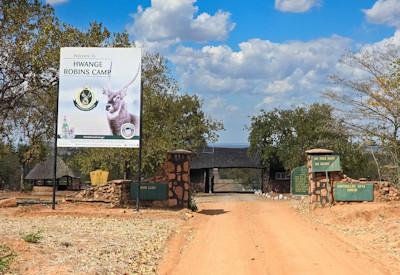
The south-east, around Ngamo and Linkwasha, has the open plains and the densest dry-season game. The north, around Sinamatella, Deteema and Robins, is hillier, rockier and much quieter. The Main Camp side in the east is the easiest to reach and the best value. First-timers usually start in the south-east.
Any camp built over a pumped waterhole. Nehimba, Camp Hwange, Deteema Springs, Davisons and Somalisa all overlook water the herds use through the dry months. From late in the dry season the elephants come in through the afternoon and on into the night, often within metres of camp.
Camp Hwange, Deteema Springs, Bumbusi Wilderness Camp and Bomani are the strongest walking options, each with guides licensed to walk armed. Walking suits the broken northern country particularly well. Most other camps offer a short guided walk alongside their game drives rather than a full walking programme.
Somalisa Camp is the flagship, with the pool and the elephant-facing deck. Somalisa Acacia is a smaller four-suite camp, better suited to families and sole-use bookings. Somalisa Expeditions is the lighter six-tent option at a lower rate, with the same guiding team and the same area to traverse.
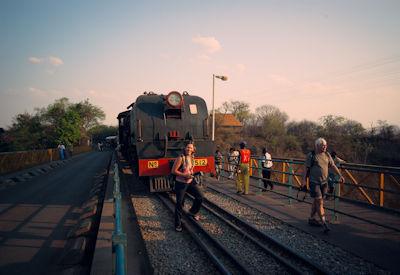
Most honeymoons are an exercise in doing very little at considerable expense, and there is a great deal to be said for that. Zimbabwe simply arranges better company for it. Elephants come down to drink below the deck while you are still on your first coffee; the guide turns out to know which lion crossed the airstrip in the night; dinner happens on a Zambezi deck while the light goes orange and then goes altogether. Nobody puts Zimbabwe at the top of the shortlist — Kenya and the Cape get there first — which is precisely why the lodges are quieter and the guiding is better than it needs to be.
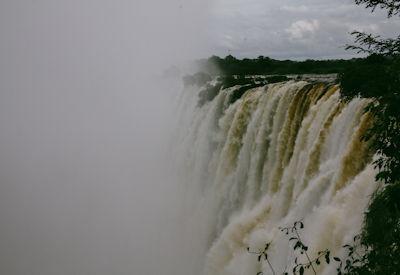
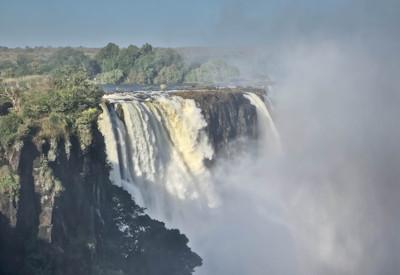
Livingstone named it after a queen who never saw it, and the Tonga had been calling it Mosi-oa-Tunya, the smoke that thunders, for a very long time before he turned up. Theirs is the better name. Five hundred million litres a minute go over the edge in full flood, which is enough to soak you through a hired raincoat before you are halfway along the Zimbabwe footpath, and enough to hide the falls entirely if you have come in the wrong month. There is also a rock pool at the very lip of the drop that people swim in. We will come to that.
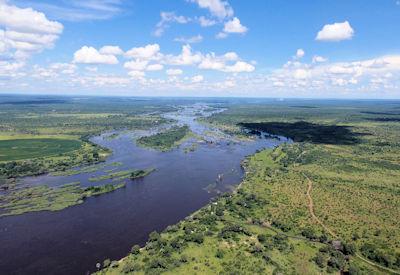
You can see the falls properly in ninety minutes. The rest of the week happens wherever you are sleeping, which makes the choice of lodge matter more here than almost anywhere else in Zimbabwe. Some of them are town hotels with a shuttle and a buffet. Others sit far enough upriver that the loudest thing at breakfast is one hippo disagreeing with another. The gap in price between those two experiences is usually smaller than you would expect, and the gap in the holiday is not. Here are five I would put my own money on.
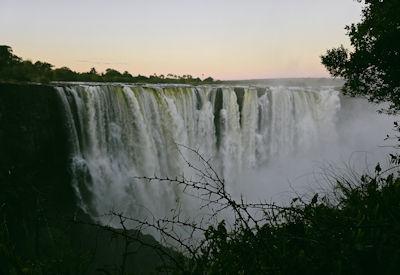
The Zambezi begins as a spring in a patch of Zambian woodland you could step across, and ends two and a half thousand kilometres later in the Indian Ocean, having spent much of the journey acting as the border of half of southern Africa. Six countries. One waterfall that needs no introduction, a dam that made an inland sea, and a stretch below that dam at Mana Pools where you are permitted to walk. It is also, at six in the evening with the light going, the single best place in this part of the continent to be sitting still.
"Tent" is a word working extremely hard in this part of the brochure. It covers canvas on a hardwood deck with a four-poster and plumbing that would pass in Kensington, and it also covers a bucket shower and a zip. What the two share is the actual reason to choose either: canvas does not keep sound out. You hear the elephants arrive at the Hwange waterhole at two in the morning. You hear the hippos settling their differences on the Zambezi. You lie there listening rather than sleeping, which is rather the point of the whole arrangement.
Hwange should not really work. Most of it sits on Kalahari sand with no permanent river anywhere near it, and the reason elephants stand shoulder to shoulder at Nyamandhlovu Pan in October is that somebody is running a diesel pump. That decision was taken in the 1920s by a warden named Ted Davison, and it has been kept up, more or less, ever since. Fourteen thousand square kilometres of managed thirst. The Big Five are all present on paper, though I would not build a holiday around seeing the rhino. The elephants are an entirely different proposition.
For most of the last century the Rhodesian authorities preferred to believe that Zimbabweans had not built Great Zimbabwe. Phoenicians were proposed. So were the Queen of Sheba's architects. The stonework is Shona, laid without mortar, eleven metres high in places, and it is the only ruin I can think of that gave its name to the country containing it. That is the sort of country this is. The obvious things — the falls, the Hwange elephants, the rapids below the gorge — are worth every hour of the flight, and underneath them sits a second Zimbabwe that most itineraries never touch.
The bridge was cast in Darlington, shipped out in pieces and bolted together over the gorge in 1905, and people now jump off it on an elastic rope. Victoria Falls has been like this ever since: a serious piece of natural history with an adrenaline economy bolted to the side of it. You can run the grade five rapids in the Batoka Gorge in the morning and be on a boat with a gin and tonic by six, watching the same water arrive flat and innocent above the lip. Both are honest ways to spend a day here. So is doing neither.