
Camp Chitubu
Highlights
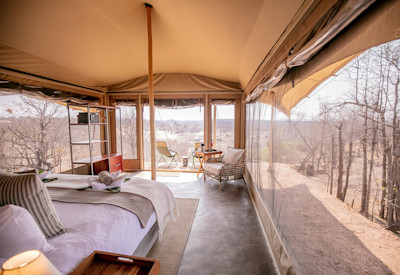
- Spectacular Luxury Tented Rooms: Camp Chitubu has six Bedouin-style tented suites and one family tent, all on a ridge above a natural spring with panoramic salt-pan views.
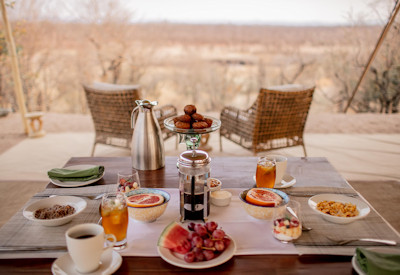
- Exceptional Cuisine: Continental or full English breakfast, wholesome lunches, game-drive canapés, three-course dinners and biscuits baked fresh every day.
- Well-Stocked Bar: Soft drinks, local and South African beers, South African house wines, spirits and liqueurs.
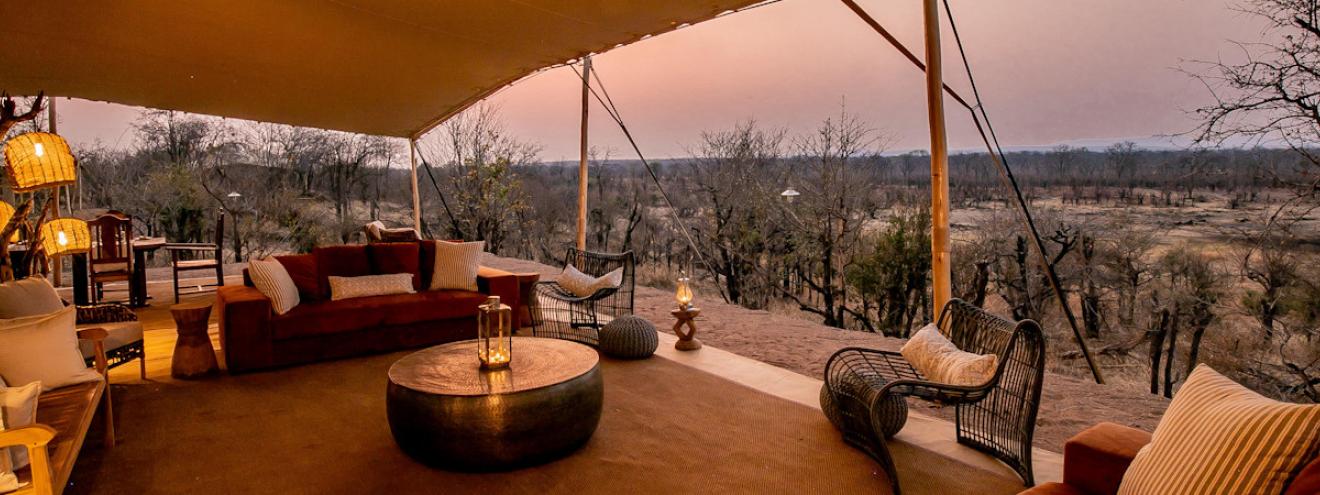
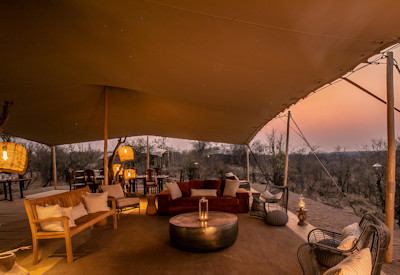
- Central Guest Area: An open-air Bedouin-tented hub with dining room, bar, lounges and a firepit, all facing the salt pan.
- Safari Experience: Twice-daily and full-day game drives, walking safaris with professional guides, and superb photography in unfenced wilderness.
- Custom 4x4 Vehicles: Three tiers of seating, a storage box with rain ponchos and blankets, and USB charging for cameras.
- Night Escort Service: Guides walk guests to their tents after dark, for safety and the chance of nocturnal wildlife on the way.
- Personalised Adventures: Birdwatching and other special interests arranged on request.
Information
- Lodge type: Tented Camp
- Location: Sinamatella, northern Hwange National Park, Zimbabwe
- Lodge size: 6 Tented Suites + 1 Family Tent
- Recommended stay: 3-7 nights
- Malaria risk: Yes. Hwange National Park is a malaria area, so take prophylaxis; the risk is highest in the November to April rains.
- Getting there: Light aircraft to Sinamatella Airstrip, then an open game-vehicle transfer to camp; road transfers from Victoria Falls can also be arranged.
Discover Untamed Luxury At Camp Chitubu: A Safari Paradise In Hwange National Park
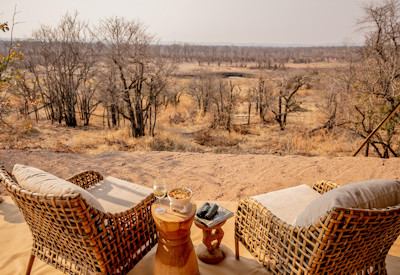
Camp Chitubu is a seven-tent luxury safari camp on a ridge in the Sinamatella region of northern Hwange National Park, Zimbabwe, just 2 km from Mandavu Dam. Mandavu is the largest body of water in Hwange, Zimbabwe's biggest national park at around 14,600 km², and in the dry months elephant, buffalo, lion and plains game gravitate towards it from across the north of the park. The camp looks straight down onto a natural spring, so the game viewing begins before you have left your veranda.
Camp Chitubu opened in 2022 and is run by guide Julian Brookstein and his wife Ashley, and the camp is built around walking. Zimbabwe trains some of the finest walking guides in Africa, and Sinamatella's basalt ridges, mopane woodland and seasonal pans are superb country for exploring on foot. Hwange holds over 100 mammal species, including African wild dog and sable antelope, and is one of the richest birding parks in southern Africa. This is a camp for travellers who want the real wilderness of Hwange with genuine comfort waiting at the end of the day.
Rooms And Suites
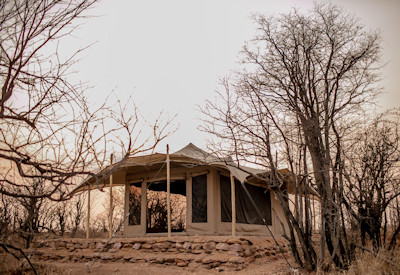
Camp Chitubu has six Bedouin-style tented suites and one family tent, each on a solid foundation and each facing the salt pan below the ridge. Power comes from an on-site solar farm, so there is electricity around the clock without the drone of a generator.
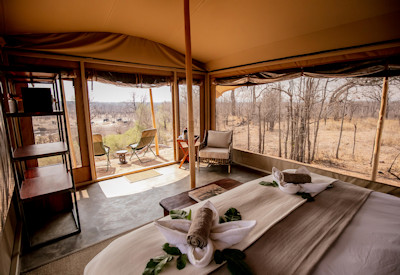
Every tent is angled for the view. Beds come as a generous king or two singles, made up with crisp cotton sheets and warm blankets, and placed so you can watch the pan from your pillow. An open wardrobe gives plenty of hanging and shelf space, and each tent has a private safe.
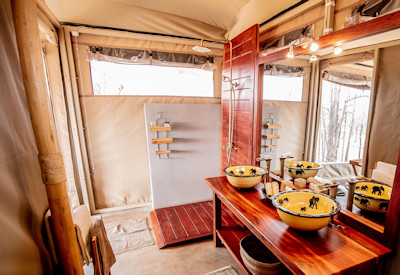
Bathrooms sit at the back of each tent: a high-pressure wet-room shower finished in teak and brass, a flush toilet, double basins beneath a large mirror, and fluffy towels. The amenity kit is thoughtful: soaps, body wash, lotion, scrub pads, sunscreen, lip balm and mosquito repellent. Laundry is available on request.
The family tent has two rooms sharing one bathroom, which makes it an excellent choice for parents travelling with children or friends sharing a safari.
Cuisine And Wine
Meals at Camp Chitubu are generous and home-baked, and the rate includes every one of them. Mornings start with a continental or full English breakfast. Lunch is wholesome and comes with dessert. Afternoon tea is served before the evening drive, canapés go out on the vehicle, and the day ends with a three-course dinner.
The kitchen bakes biscuits fresh every day, and they sit in the main area with premium teas and coffees, available whenever you want them.
The bar serves unlimited filtered water, soft drinks, local and South African beers, and a selection of South African house wines, spirits and liqueurs. It is ideal for a sundowner or a nightcap by the fire.
Facilities
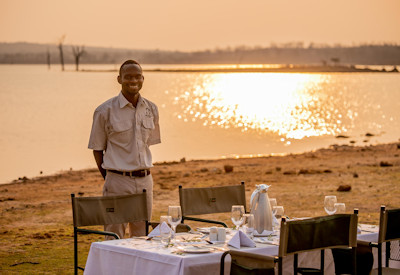
Camp Chitubu's central guest area is a large open-air Bedouin tent with the dining room, bar and lounges all looking out over the salt pan. The styling is contemporary safari: relaxed, comfortable and made for long lunches and lazy midday siestas between drives. The staff are among the warmest and most attentive in Hwange, and guests feel at home from the moment they step off the vehicle.
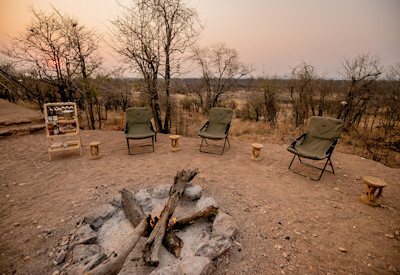
Beside the main area is an open-air firepit, the natural gathering point after dinner for nightcaps and the day's sightings under an enormous Hwange sky.
Camp Chitubu is unfenced, so after dark a guide walks every guest back to their tent. It is a sensible safety measure and quite often an extra sighting, with hyena, genet or elephant moving through camp at night.
Activities
Camp Chitubu offers game drives, walking safaris and photography in the unfenced Sinamatella region of Hwange National Park. Game drives run twice daily, or as a full day out with a packed lunch, and your guide shapes each outing around what you most want to see.
Walking safaris are the signature activity. Professional guides lead guests on foot through the ridges and pans around camp, reading tracks and approaching game at walking pace, which is the most thrilling way to experience Hwange.
Photography is excellent at every skill level, and the guides are happy to position the vehicle for light and angle. Tell the camp about special interests such as birding in advance, and they will tailor your activities around them.
The 4x4 game vehicles have three tiers of seating, two guests per row, so everyone has a clear view. A custom storage box holds complimentary rain ponchos and blankets, and USB ports keep cameras and phones charged in the field.
A private vehicle can be booked before arrival for an additional fee. It is ideal for families, keen photographers, and anyone who wants to stay at a sighting for as long as they like.
Camp Chitubu Frequently Asked Questions
Where is Camp Chitubu in Hwange National Park?
Camp Chitubu is in the Sinamatella region of northern Hwange National Park, Zimbabwe, on a ridge overlooking a natural spring and salt pan. The camp is 2 km from Mandavu Dam, the largest water body in Hwange, which draws elephant, buffalo and predators throughout the dry season. Sinamatella is quieter than the park's south-eastern Main Camp area, with basalt ridges and mopane woodland.
How many rooms does Camp Chitubu have?
Camp Chitubu has seven tented units: six Bedouin-style tented suites with king or twin beds and en-suite bathrooms, plus one family tent with two rooms sharing a bathroom. Every tent faces the salt pan below the ridge. The camp runs on an on-site solar farm, and bathrooms have high-pressure wet-room showers finished in teak and brass.
Is there malaria at Camp Chitubu?
Yes. Camp Chitubu is in Hwange National Park, which is a malaria area, so anti-malaria prophylaxis is recommended for every guest. Risk is highest during the November to April rainy season and lower in the dry winter months. Speak to a travel doctor before departure, and use repellent, long sleeves and trousers in the evenings.
What activities are offered at Camp Chitubu?
Camp Chitubu offers twice-daily game drives, full-day drives, and walking safaris led by professional guides, the camp's signature activity. Photography and birdwatching can be tailored on request, and a private vehicle can be booked in advance for an extra fee. Game vehicles have three tiers of seats, two per row, with ponchos, blankets and USB charging on board.
When is the best time to visit Camp Chitubu?
The best time to visit Camp Chitubu is the dry season, July to October, when water is scarce across Hwange National Park and game concentrates around Mandavu Dam and the pans near camp. May and June are cooler and still excellent. The November to April rains bring green landscapes, newborn animals and superb birding, with game more widely dispersed.
How long should I stay at Camp Chitubu?
Uyaphi recommends three to seven nights at Camp Chitubu in Hwange National Park. Three nights allows a good mix of game drives and at least one walking safari; four or five nights gives time to explore Sinamatella and Mandavu Dam without rushing. Camp Chitubu combines well with Victoria Falls for a classic Zimbabwe safari itinerary.
In Conclusion
Camp Chitubu is one of the finest small camps in northern Hwange National Park: seven tents on a ridge above a natural spring, 2 km from Mandavu Dam, with walking safaris at the heart of every stay. It pairs solar-powered comfort, excellent home cooking and outstanding hospitality with some of the wildest and least crowded game viewing in Zimbabwe.
Camp Chitubu suits walkers, photographers and anyone who wants to experience Hwange up close rather than from a busy loop road. Three nights is the minimum to do it justice; four or five lets you settle into the rhythm of the bush.
Rates form part of a safari itinerary
Camp Chitubu Rates
Per person per night sharing
Rates are in US Dollar
*Rates may vary according to season
- All meals
- Soft drinks
- Shared safari activities
- Laundry
- Emergency Medical Evacuation
- 2% Zimbabwe Tourism Levy
- VAT where applicable
- All flights
- Road Transfers
- Alcoholic & Premium brand drinks
- Gratuities
- Items of a personal nature
- Personal Medical and Travel insurance
- National Parks conservation Levy
- River Usage Levy
- Fishing levy
Book This Zimbabwe Lodge Now
Zimbabwe Travel Topics
The Perfect Zimbabwe Honeymoon
Most honeymoons are an exercise in doing very little at considerable expense, and there is a great deal to be said for that. Zimbabwe simply arranges better company for it. Elephants come down to drink below the deck while you are still on your first coffee; the guide turns out to know which lion crossed the airstrip in the night; dinner happens on a Zambezi deck while the light goes orange and then goes altogether. Nobody puts Zimbabwe at the top of the shortlist — Kenya and the Cape get there first — which is precisely why the lodges are quieter and the guiding is better than it needs to be.
Top 10 Must See Attractions In Victoria Falls
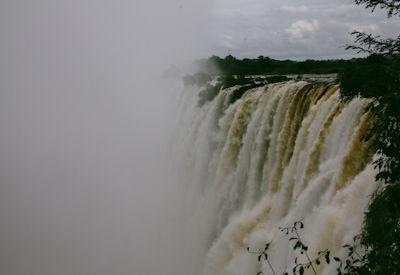
Livingstone named it after a queen who never saw it, and the Tonga had been calling it Mosi-oa-Tunya, the smoke that thunders, for a very long time before he turned up. Theirs is the better name. Five hundred million litres a minute go over the edge in full flood, which is enough to soak you through a hired raincoat before you are halfway along the Zimbabwe footpath, and enough to hide the falls entirely if you have come in the wrong month. There is also a rock pool at the very lip of the drop that people swim in. We will come to that.
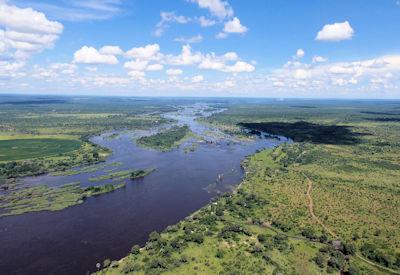
5 Best Lodges In Victoria Falls
You can see the falls properly in ninety minutes. The rest of the week happens wherever you are sleeping, which makes the choice of lodge matter more here than almost anywhere else in Zimbabwe. Some of them are town hotels with a shuttle and a buffet. Others sit far enough upriver that the loudest thing at breakfast is one hippo disagreeing with another. The gap in price between those two experiences is usually smaller than you would expect, and the gap in the holiday is not. Here are five I would put my own money on.
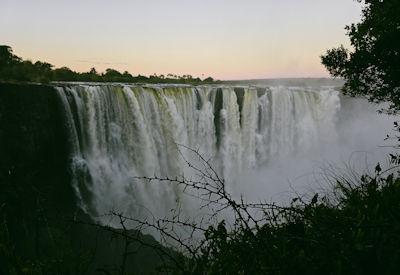
10 Reasons To Visit The Zambezi River
The Zambezi begins as a spring in a patch of Zambian woodland you could step across, and ends two and a half thousand kilometres later in the Indian Ocean, having spent much of the journey acting as the border of half of southern Africa. Six countries. One waterfall that needs no introduction, a dam that made an inland sea, and a stretch below that dam at Mana Pools where you are permitted to walk. It is also, at six in the evening with the light going, the single best place in this part of the continent to be sitting still.
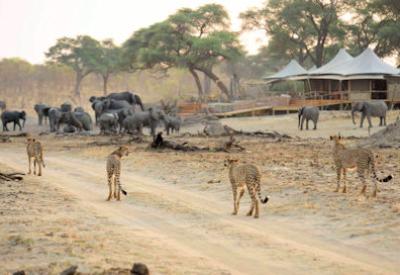
Luxury Tented Safari Camps in Zimbabwe
"Tent" is a word working extremely hard in this part of the brochure. It covers canvas on a hardwood deck with a four-poster and plumbing that would pass in Kensington, and it also covers a bucket shower and a zip. What the two share is the actual reason to choose either: canvas does not keep sound out. You hear the elephants arrive at the Hwange waterhole at two in the morning. You hear the hippos settling their differences on the Zambezi. You lie there listening rather than sleeping, which is rather the point of the whole arrangement.
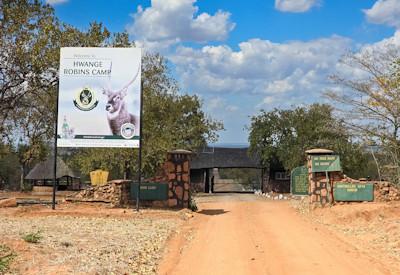
10 Reasons To Visit The Hwange National Park
Hwange should not really work. Most of it sits on Kalahari sand with no permanent river anywhere near it, and the reason elephants stand shoulder to shoulder at Nyamandhlovu Pan in October is that somebody is running a diesel pump. That decision was taken in the 1920s by a warden named Ted Davison, and it has been kept up, more or less, ever since. Fourteen thousand square kilometres of managed thirst. The Big Five are all present on paper, though I would not build a holiday around seeing the rhino. The elephants are an entirely different proposition.
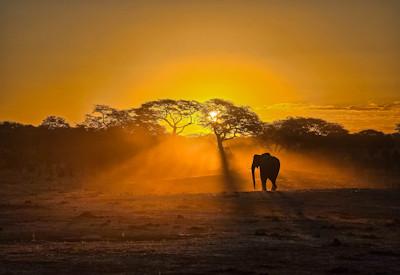
Zimbabwe Travel Bucket List
For most of the last century the Rhodesian authorities preferred to believe that Zimbabweans had not built Great Zimbabwe. Phoenicians were proposed. So were the Queen of Sheba's architects. The stonework is Shona, laid without mortar, eleven metres high in places, and it is the only ruin I can think of that gave its name to the country containing it. That is the sort of country this is. The obvious things — the falls, the Hwange elephants, the rapids below the gorge — are worth every hour of the flight, and underneath them sits a second Zimbabwe that most itineraries never touch.
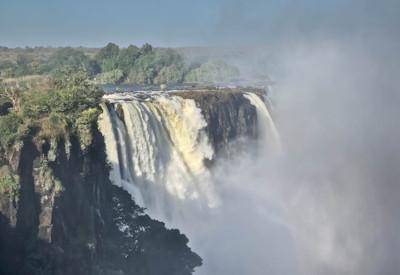
10 Reasons to Visit Victoria Falls for an Unforgettable Experience
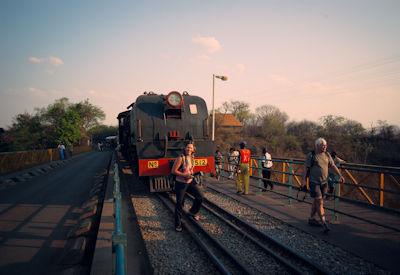
The bridge was cast in Darlington, shipped out in pieces and bolted together over the gorge in 1905, and people now jump off it on an elastic rope. Victoria Falls has been like this ever since: a serious piece of natural history with an adrenaline economy bolted to the side of it. You can run the grade five rapids in the Batoka Gorge in the morning and be on a boat with a gin and tonic by six, watching the same water arrive flat and innocent above the lip. Both are honest ways to spend a day here. So is doing neither.