
Best Eco-Friendly Lodges In Kruger National Park
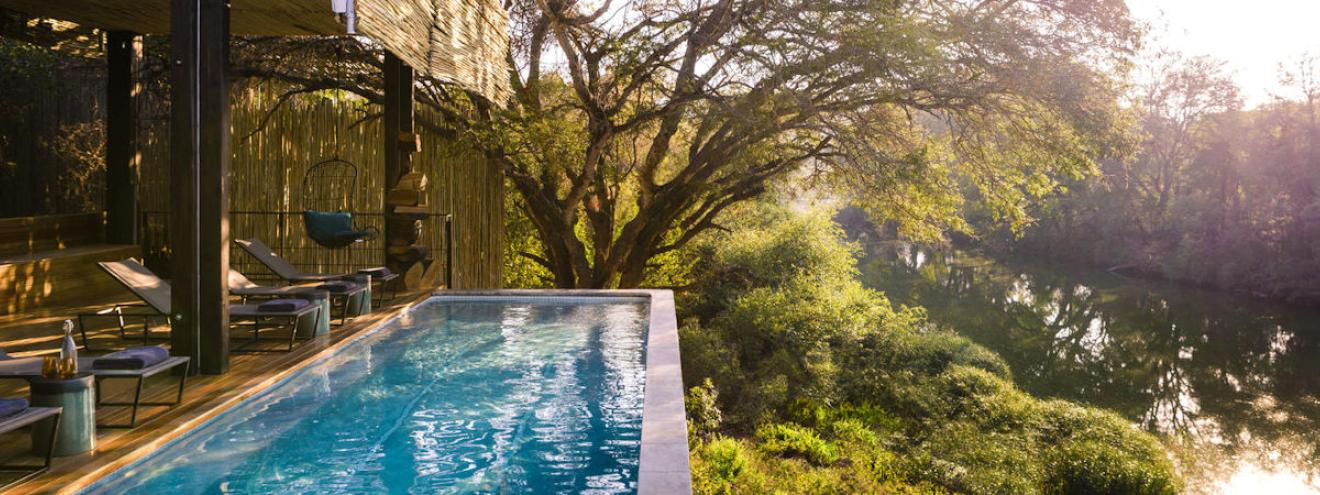
Top Eco-Friendly Lodges to Experience in Kruger National Park
Finding the best eco-friendly lodges in Kruger National Park means discovering properties that deliver world-class comfort while actively protecting one of Africa’s most precious ecosystems. These aren’t just safari lodges with a recycling bin—they’re conservation powerhouses running on solar power, employing local communities, and funding anti-poaching initiatives that keep rhinos and lions safe.
This guide covers 12 carefully selected properties across the Greater Kruger ecosystem, from ultra-luxury retreats to intimate tented camps. Each one operates within private concessions or private game reserves like Timbavati, Sabi Sands, Thornybush, and the Lebombo region, all sharing unfenced borders with Kruger National Park itself.
Overview: Eco-Friendly Safaris in Greater Kruger
When we talk about eco-friendly lodges in the Kruger, we’re referring to properties that go beyond greenwashing. These lodges integrate solar panels and alternative energy systems, sophisticated water conservation methods, construction using natural materials, low-impact game viewing practices, and direct support for wildlife protection and surrounding communities.
The 12 lodges profiled here represent the best eco-friendly lodges currently operating in the Greater Kruger region:
- Motswari Game Lodge
- Kings Camp
- Simbavati River Lodge
- nThambo Tree Camp
- Garonga Safari Camp
- Singita Sweni
- Singita Lebombo
- Cheetah Plains Lodge
- Sabi Sabi Bush Lodge
- MalaMala Main Camp
- Thornybush Game Lodge
- Royal Malewane
Each lodge offers exceptional wildlife encounters with the Big Five while maintaining a minimal environmental impact on the pristine wilderness they call home.
Why Choose an Eco-Friendly Lodge in Kruger?
Eco lodges in Kruger National Park combine incredible sightings of lions, elephants, leopards, rhinos, and buffalo with tangible sustainability initiatives that make your Safari meaningful beyond the game drive.
Here’s what sets these properties apart:
- Environmental benefits: Reduced carbon footprint through solar power (many lodges achieve 70-90% renewable energy), careful water use through rainwater harvesting and greywater recycling, responsible waste management, and biodiversity protection across thousands of hectares.
- Conservation impact: Direct funding for anti-poaching efforts, habitat restoration projects, and species-specific research. Lodges in reserves like Timbavati, Sabi Sands, and Thornybush contribute to rhino monitoring programs, wild dog tracking, and vulture conservation.
- Community benefits: Employment and training for local people from villages near Acornhoek, Hoedspruit, and Bushbuckridge municipalities. Many lodges achieve 85-90% local staff employment and fund schools, clinics, and boreholes for surrounding communities.
- Luxury without compromise: Eco-friendly features don’t mean sacrificing comfort. These properties offer fine dining, en suite bathrooms, outdoor showers, private decks, plunge pools, and personalised guiding from experienced guides—delivering world-class comfort alongside conservation credentials.
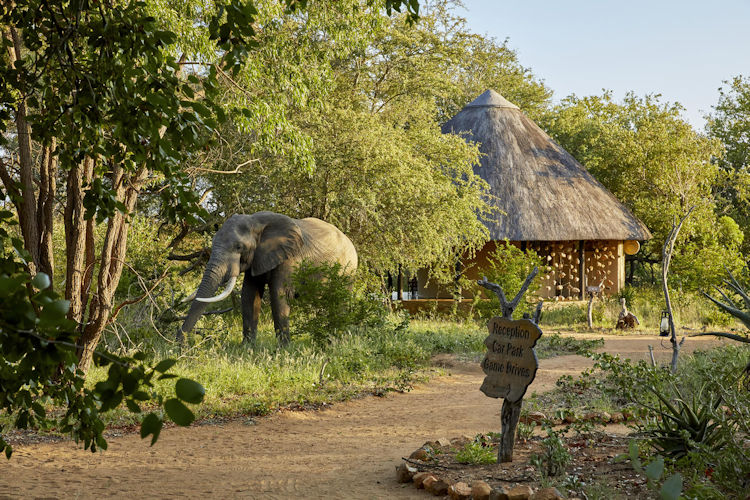
Singita Lebombo Lodge (Kruger National Park, Lebombo Concession)
Singita Lebombo sits dramatically perched above the N’wanetsi River in a private concession within Kruger National Park’s far eastern reaches. Its eagle-nest-inspired contemporary design has made it an icon of ultra-luxury eco safaris, where panoramic views and serious conservation work intersect.
The lodge offers 13 suites featuring glass walls, private decks, and plunge pools—all powered by extensive solar installations. The property achieves carbon neutrality through careful offsets and employs advanced drone surveillance technology for poacher detection across 15,000 hectares of protected land.
Key eco features:
- 100% solar-powered operations with energy-efficient modern design
- Sophisticated water purification and recycling systems
- Construction using recycled steel, minimising concrete use by 70%
- Strict zero single-use plastic policies
Conservation and community work:
- Anti-poaching teams utilising camera traps are logging 1,200+ wildlife images monthly
- 10% of profits channelled to community health clinics serving 2,000 residents
- Long-term rewilding and land management initiatives dating from the early 2000s
- Employment policy prioritising 85% local staff
Wildlife viewing here is exceptional, with guests averaging four lion pride encounters per stay. The lodge limits guest numbers to ensure low-impact tourism and intimate, educational safaris focused on ecology and the natural habitat of Greater Kruger’s predators.
Singita Sweni Lodge (Lebombo Concession, Riverside Eco Sanctuary)
Singita Sweni offers an even more intimate experience than its sibling Lebombo, with just six minimalist suites tucked along the Sweni River in riverine forest. This is a sanctuary for wildlife enthusiasts seeking tranquillity and deep immersion in the bush.
The architecture reflects a commitment to minimal impact—low-slung buildings elevated on wooden decks protect the floodplain ecosystem, while natural tones and recycled materials blend the structures into their surroundings. Glass walls provide 270-degree views of the river, where elephants and buffalo regularly come to drink.
Sustainability operations:
- Solar and hybrid energy systems are powering all lodge facilities
- Advanced greywater recycling for irrigation and non-potable uses
- Strict waste separation and recycling protocols
- Use of locally sourced and sustainable building materials
The lodge supports Singita’s community partnership programs and local education projects, including the Pfunanani scholarship program, which educates 50 children annually. Walking safaris here focus on trees, birds, and smaller creatures often missed on traditional game drives—a unique blend of natural beauty and educational depth that defines the Singita experience.
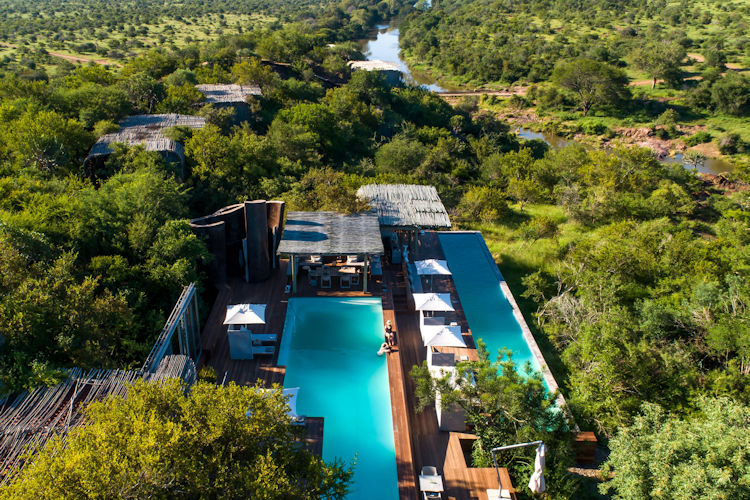
Cheetah Plains Lodge (Sabi Sand Game Reserve, Carbon-Neutral Innovation)
Cheetah Plains represents the future of eco-conscious safari design. Located in the legendary Sabi Sands Game Reserve bordering western Kruger, this lodge has earned recognition as one of Africa’s most technologically advanced sustainable properties.
The lodge runs almost entirely on solar power from a proprietary solar farm supplemented by biomass generators, achieving 24/7 operation with near-zero reliance on fossil fuels. But the real innovation is in the game drive: electric vehicles offer silent safaris that reduce emissions and allow closer wildlife sightings without engine noise disturbing predators.
Eco technology highlights:
| Feature | Specification |
|---|---|
| Energy source | Solar farm + biomass backup |
| Water recycling | 85% efficiency |
| Food sourcing | 60% from on-site organic farm |
| Guest capacity | Under 20 for exclusivity |
The contemporary villas maximise natural light and ventilation, with indigenous landscaping requiring minimal irrigation. Conservation work includes cheetah translocations—four cubs were successfully moved in 2023—and active participation in Sabi Sand’s broader wildlife management.
For travellers seeking a luxurious safari experience that previews where eco-friendly practices are heading, Cheetah Plains sets the benchmark.
Sabi Sabi Bush Lodge (Sabi Sand, Long-Standing Conservation Ethos)
Sabi Sabi Bush Lodge brings together rich heritage and modern eco practices in one of South Africa’s most famous private game reserves. Operating since the late 1970s, this lodge offers year-round Big Five sightings in an area renowned for its leopard density.
The property has progressively upgraded its sustainability measures, including partial solar use, LED lighting, eco-friendly cleaning products, and water-conserving fixtures throughout its 25 suites. Rainwater collection systems store up to 100,000 litres seasonally, supplementing the lodge’s water needs.
Conservation presence:
- Habitat management and ecological monitoring since the 1970s
- Anti-poaching support and collaboration across the Sabi Sand
- The Bush baby rehabilitation program releases 15 individuals yearly
- Horn-darting research contributing to rhino protection
The lodge excels as a family adventure destination, offering children’s programs with conservation themes that educate young wildlife enthusiasts about protecting the natural habitat. Local employment extends to rangers, trackers, and hospitality staff from surrounding communities, with ongoing training ensuring career development and skills transfer.
MalaMala Main Camp (Historic Reserve with Modern Eco Practices)
MalaMala Main Camp holds legendary status as one of the oldest private game reserves adjoining Kruger, with a prime position along the Sand River that attracts extraordinary wildlife concentrations. The reserve’s 13,500 unfenced hectares host over 40 lion coalition members tracked via GPS collars.
What makes MalaMala remarkable is how an established lodge can evolve sustainably without losing its heritage character. The property has undergone phased retrofitting:
- Solar retrofits now covering 60% of energy needs
- Comprehensive recycling diverting 95% of waste from landfills
- Water-saving fixtures and improved insulation reduce energy demand
- Low-vehicle-density safari practices have been maintained for decades
Land stewardship here means carefully controlled off-road driving and protection of extensive river frontage as wildlife corridors. Anti-poaching collaborations with neighbouring reserves and Kruger authorities have been strengthened over the years.
The lodge employs 200 local staff, with training programs yielding 50 ranger promotions since 2015. This represents a model for how historical prestige can coexist with serious, ongoing shifts toward minimal environmental impact operations.
Royal Malewane (Greater Kruger, Thornybush Area – High-End Conservation Luxury)
Royal Malewane sits in the Greater Kruger ecosystem near Hoedspruit, offering what many consider the pinnacle of luxury lodges in the region. With just six tented suites and exclusive use options, guest numbers remain tiny while guiding quality reaches exceptional levels.
The lodge integrates eco initiatives throughout its operations:
- Native landscaping requiring minimal water
- Water-wise pools and gardens designed for the Lowveld climate
- Investment in solar and energy-efficient systems
- Zero-waste kitchen sourcing 90% of produce locally
Conservation contributions include funding rangers, supporting local anti-poaching efforts, and involvement in rhino protection programs that have continued through the 2010s and 2020s. The lodge works with cheetah and wild dog programs, with eight animals collared for data collection that has improved survival rates by 20%.
Community development extends to collaboration with local schools and charitable foundations, plus employment of Shangaan cultural practitioners who share the region’s rich heritage with guests. Expert endorsements from National Geographic have praised Royal Malewane’s design harmony with the surrounding wilderness.
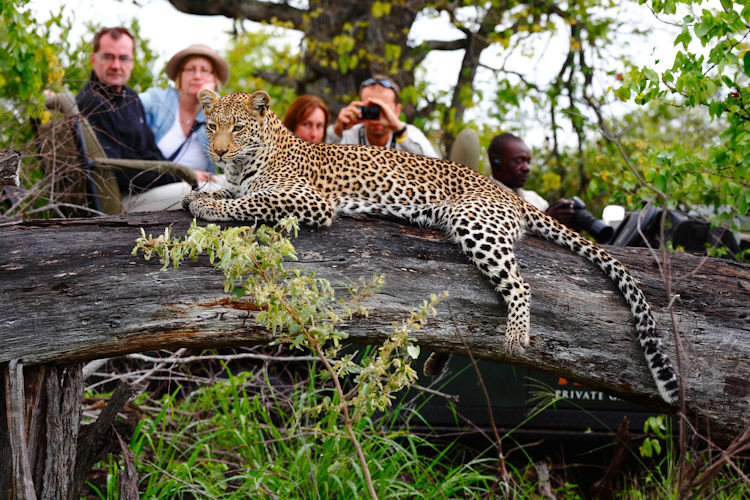
Motswari Game Lodge (Timbavati Private Nature Reserve)
Motswari Game Lodge occupies prime territory in the Timbavati Private Nature Reserve, famous for its white lion genetics and exceptional Big Five viewing. The reserve’s open borders with Kruger allow wildlife to roam freely across vast tracts of natural habitat.
The lodge takes a rustic-chic approach to design, using natural materials like stone and thatch that blend into the Makhutswi Riverine bushveld. Eight luxury suites emphasise low-impact lighting and careful water use, while the surrounding landscape features low-water indigenous plants rather than thirsty lawns.
Sustainability highlights:
- Over 90% local staff are employed in all roles, including anti-poaching units
- Tree-planting drives have added 5,000+ saplings since 2015 for habitat restoration
- Personalised guiding ratios of 1:6 for deeper wildlife insights
- Construction from locally sourced stone and thatch
Timbavati operates as a conservation-focused, low-density reserve that limits vehicle numbers and preserves large areas for wildlife. The famous white lions—not the albino variety but a rare genetic variant—are regularly spotted on game drives from Motswari, alongside leopards and elephants.
The lodge offers cultural interactions with surrounding villages and guiding internships for local people, making it accessible to travellers seeking genuine eco credentials without ultra-luxury pricing.
Kings Camp (Timbavati – Classic Eco-Luxe Safari)
Kings Camp delivers classic colonial-style safari aesthetics with thoroughly modern, eco-conscious operations behind the scenes. The lodge overlooks a productive waterhole that attracts lions, elephants, and buffalo throughout the day and night.
Despite its old-world appearance with thatched roofs and period-inspired décor, Kings Camp runs on 100% solar-generated electricity. The property has eliminated single-use plastics, implemented comprehensive recycling protocols, and installed LED lighting throughout its 10 opulent tents.
Conservation work:
| Initiative | Impact |
|---|---|
| Rhino monitoring | 12 individuals GPS-collared since 2018 |
| Guest capacity | Capped at 20 for low-impact viewing |
| Community education | 300 children supported annually through school funding |
| Revenue sharing | 5% of revenues channeled to local schools |
The lodge actively participates in Timbavati’s broader conservation management, including monitoring of big cats and anti-poaching collaborations across the unfenced reserve. Support for community programs around Acornhoek includes education, healthcare, and skills development projects.
For travellers wanting a heritage safari atmosphere with genuine supporting local communities credentials, Kings Camp offers delicious meals, excellent guiding, and the satisfaction of contributing to measurable conservation outcomes.
Simbavati River Lodge (Timbavati – Family-Friendly Eco Focus)
Simbavati River Lodge proves that eco-friendly stays can be accessible and family-oriented, not only ultra-luxe. The property sits along the Nhlaralumi River in Timbavati, with a relaxed atmosphere that welcomes children while maintaining serious conservation credentials.
The lodge employs solar and battery systems for partial power, low-impact lighting designed to preserve spectacular night skies, and careful wastewater treatment using advanced filtration from the river. A strict no-elephant-back-riding policy reflects the property’s commitment to ethical wildlife interactions.
Wildlife and conservation:
- Vulture restaurant feeding 50 birds weekly to boost populations down 80% regionally
- African wild dogs were sighted on 70% of game drives due to the employment of an expert tracker employment
- Guest-led river cleanups remove 200kg of waste annually
- 80% of produce is sourced locally to reduce supply chain emissions
The riverbank setting provides regular wildlife sightings as animals come to drink, and activities including game drives and bush walks are designed with minimal disturbance in mind. Employment of 40 local trackers enhances detection rates for rare species while providing careers for local people.
Simbavati demonstrates that families seeking a family adventure can find eco credentials, excellent wildlife viewing, and comfortable accommodation without the price tag of ultra-exclusive properties.
nThambo Tree Camp (Klaserie / Greater Kruger – Low-Impact Treehouse Style)
nThambo Tree Camp takes low-impact tourism to its logical conclusion with elevated “treehouse” chalets set on stilts in the Klaserie Private Nature Reserve. This intimate Camp limits capacity to just four tents, creating one of the most personal safari experiences in Greater Kruger.
The raised wooden platforms reduce land disturbance and allow wildlife to move freely underneath the structures. Construction uses minimal permanent infrastructure, emphasising natural ventilation over energy-intensive air-conditioning.
Eco credentials:
- 100% solar power with zero plastic waste tracked since inception
- Limited generator use, preserving the natural soundscape
- Composting toilets and solar geysers are reducing water and energy demand
- 1:4 guest-to-staff ratio for hyper-personalised experiences
The Camp’s rewilding project has reintroduced 20 small antelope species, boosting predator diversity across the reserve. Bush walks reveal micro-ecosystems often missed on vehicle-based safaris, while elevated decks provide bird’s-eye views of the river and surrounding bush.
For eco-minded travellers seeking simplicity over luxury, nThambo offers star-filled skies, quiet nights disturbed only by hyena calls, and the satisfaction of staying somewhere with a genuinely minimal footprint.
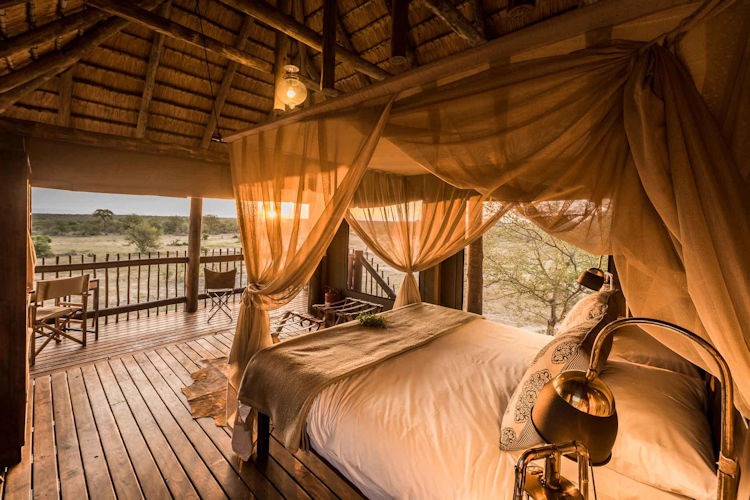
Garonga Safari Camp (Makuleke / Greater Kruger Region – “Safari for the Soul”)
Garonga Safari Camp markets itself as a “Safari for the Soul” in the Greater Kruger area near Phalaborwa, combining a strong sustainability focus with signature experiences like sleep-outs and bush baths. The lodge operates within the Makalali Private Game Reserve’s 14,000 hectares.
Notable solar installations power eight tented suites featuring rammed earth walls that provide natural thermal regulation, reducing cooling needs by 40%. Greywater systems using reed-bed treatment recycle 90% of wastewater for irrigation, while the lodge layout maximises natural airflow.
Conservation and community:
- Cheetah rehabilitation program tracking six individuals via GPS collars
- Anti-poaching patrols reporting zero rhino losses in 2024
- Guest photographers documenting 300 leopard sightings annually
- Local staff sourcing and training opportunities for the surrounding villages
The Camp’s unfenced location allows free-roaming herds of elephants, buffalo, and antelope to pass through regularly—though vigilant guiding ensures safety during close encounters. Garonga represents a mid-sized, strongly eco-driven option that delivers modern comfort alongside measurable conservation outcomes.
Thornybush Game Lodge (Thornybush Private Game Reserve)
Thornybush Game Lodge anchors the Thornybush Reserve, a key component of the Greater Kruger ecosystem near Hoedspruit. The reserve’s open savannas and seasonal riverbeds provide classic bushveld scenery and reliable Big Five sightings.
The lodge has implemented multi-camp solar grids powering 40 rooms, river purification plants recycling 80% of water, and aggressive plastic-reduction policies. Habitat restoration projects and ecological research—particularly big cat and rhino monitoring—contribute to regional conservation efforts.
Anti-poaching and community impact:
| Program | Outcome |
|---|---|
| Snaring patrols | 500 traps removed annually |
| Wild dog monitoring | 3 families totaling 25 members tracked |
| Community trusts | 10 boreholes serving 5,000 villagers |
| Accessible airstrip | Reduces road travel emissions |
Thornybush Community Projects runs education and healthcare support for local villages, making the lodge a flagship for both wildlife experiences and responsible tourism. The thatched luxury suites blend into the landscape while offering the contemporary comfort that modern travellers expect.
How to Choose the Best Eco-Friendly Lodge for Your Kruger Safari
Every lodge profiled here offers genuine, eco-friendly practices and exceptional wildlife encounters. The right choice depends on matching your budget, desired luxury level, and preferred reserve location.
Prioritise your eco values:
- Full solar operation: Cheetah Plains, Kings Camp, Singita properties
- Electric game vehicles: Cheetah Plains leads the field
- Plastic-free policies: Most lodges have implemented these, but Singita and Thornybush are particularly rigorous
- Community programs: Thornybush, MalaMala, and Royal Malewane show measurable community impact
- Scientific conservation: Garonga’s cheetah program, Simbavati’s vulture restaurant, MalaMala’s lion research
Match your traveller profile:
- Ultra-luxury seekers: Singita Lebombo, Singita Sweni, Royal Malewane, Cheetah Plains
- Family adventure: Sabi Sabi Bush Lodge, Simbavati River Lodge, Thornybush Game Lodge
- Rustic eco purists: nThambo Tree Camp, Motswari Game Lodge
Practical advice:
Ask lodges directly for up-to-date information on current eco projects and certifications. Initiatives evolve constantly—new solar installations, expanded community programs, and additional conservation partnerships are announced regularly across the Greater Kruger lodges.
Your stay at any of these properties represents a direct contribution to preserving Kruger’s ecosystems. The rangers protecting rhinos, the researchers tracking wild dogs, and the communities receiving employment and education support all benefit from sustainable travel choices.
When you book an eco-friendly lodge, you’re not just purchasing a luxurious safari experience—you’re investing in the future of one of Africa’s most important wilderness areas. The park offers something irreplaceable, and these lodges ensure it remains protected for generations of wildlife enthusiasts to come.
Travel To The Kruger Park Now
Map of Lodges in and around the Greater Kruger National Park
Lodges And Camps In The Kruger National Park
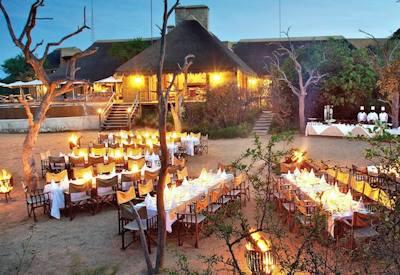
Kapama River Lodge
Kapama River Lodge is the perfect destination for an unforgettable African wildlife experience. Located in the Limpopo province of southern Africa, this incredible game reserve offers stunning landscapes and abundant wildlife, including a wide variety of species, from rhinos to lions to giraffes. Enjoy morning and evening game drives with experienced guides, plus a range of activities such as swimming, spa treatments or a visit to the Rhino Boma. Kapama River Lodge is great value for money with 64 suites and offers an unforgettable experience for couples, families or groups.
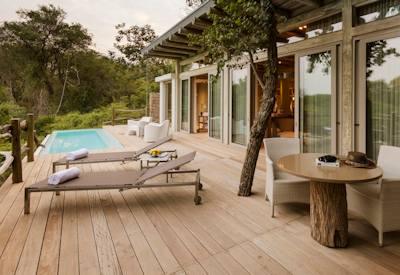
Kapama Karula
Kapama Karula is an incredibly luxurious and serene safari lodge situated in the Kapama Game Reserve, South Africa. Boasting stunning views over the bushveld and surrounding river bed, this five-star property offers guests a range of activities to enjoy, such as open 4x4 safaris to get up close with the "Big 5" wildlife species, as well as heated plunge pools, wine and cuisine tasting experiences, family suites and spa & wellness options. Enjoy an unforgettable African Safari in the tranquil Kapama Karula Lodge.
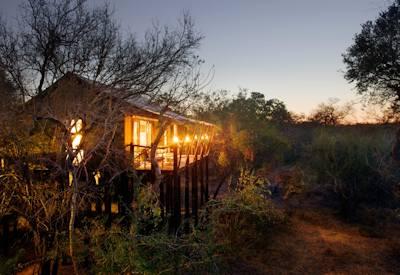
Kapama Buffalo Camp
Kapama Buffalo Camp is an exclusive and luxurious safari located in the heart of South Africa's Kapama Game Reserve, one of the most sought-after Big 5 reserves. Buffalo Camp offers up to 20 guests a unique and intimate stay with 10 tented suites that bring together luxury and authenticity. Guests can partake in guided game drives through the stunning reserve and learn about the local flora, fauna, and wildlife. After a day of exploring, relax by the camp's swimming pool or enjoy dinner in the Boma.
Kapama Southern Camp
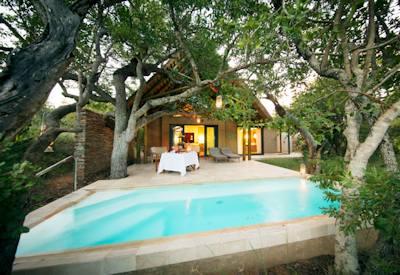
Kapama Southern Camp is the perfect destination for a luxurious yet affordable South Africa safari. Located in the tranquil bushveld of the Kapama Private Game Reserve, this beautifully appointed tented camp features 25 luxurious suites, each with its own private plunge pool. Guests can take advantage of game drives and nature walks led by experienced guides, where they can observe the abundant wildlife in their natural habitat. The camp also offers a main swimming pool, outdoor showers and an incredible array of meals and wines.
Ezulwini River Lodge
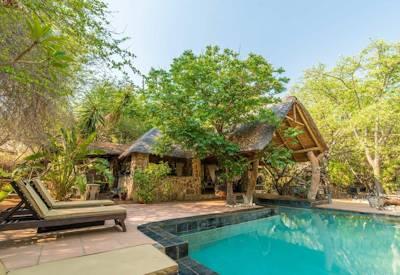
Ezulwini River Lodge is one of the absolute best lodges for an truly unforgettable African experience. It's perfectly nestled right in the very heart of the "Big Five" Balule Game Reserve, making its location nothing short of spectacular. Nestled along the Olifants River, the lodge offers panoramic 180-degree views of the surrounding bushveld, teeming with magnificent wildlife and vibrant birdlife. This luxurious game lodge delivers an experience of unparalleled quality, ensuring every moment spent here is deeply immersed in the authentic magic of Africa.
Ezulwini Billy's Lodge
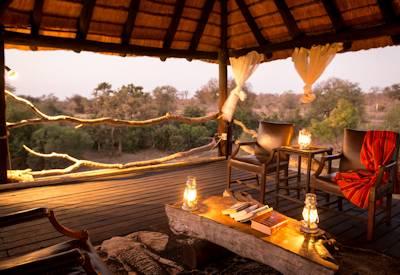
Ezulwini Billy's Lodge, spectacularly located within the Greater Kruger National Park and the Balule Nature Reserve, offers guests an unrivaled experience of the African bushveld. Guests are treated to an array of extraordinary activities designed to connect them deeply with the natural world. Thoughtfully designed to blend luxury with authenticity, Ezulwini Billy's Lodge combines the thrill of the wild with world-class hospitality, making it an exceptional destination for anyone seeking adventure, comfort, and a true connection to Africa’s heart.
Becks Safari Lodge
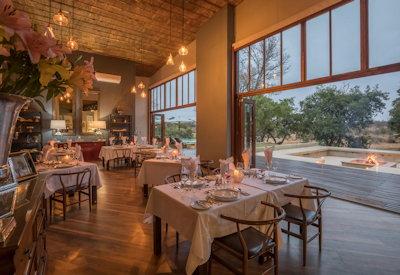
The amazing Becks Safari Lodge combines innovative design and luxury living, providing an upmarket and exclusive offering for those who demand only the best. Each detail is thoughtfully curated to ensure an unparalleled experience in the heart of the wild. Located in the renowned 'Big 5' Karongwe Private Game Reserve in Limpopo, Becks Safari Lodge offers sophisticated, contemporary safari living with an absolute appreciation for the untamed beauty of the surrounding South African bushveld.
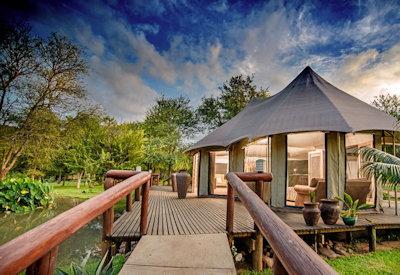
Chisomo Safari Camp
Chisomo Safari Camp is nestled deep within the wildlife-rich Karongwe Game Reserve, a haven for nature lovers seeking an unforgettable safari experience. The camp combines the beauty of the African wilderness with luxurious comfort, providing guests with a unique blend of adventure and relaxation. Friendly and attentive staff ensure warm hospitality, while the camp's fine cuisine, featuring a mix of local and international flavors, makes every meal memorable. Guests can enjoy exceptional "Big 5" game viewing opportunities, with expert guides leading thrilling safaris through the reserve's diverse landscapes.