
Zambezi Expeditions Camp
Highlights
- Six Meru-style tents on the banks of the Zambezi River
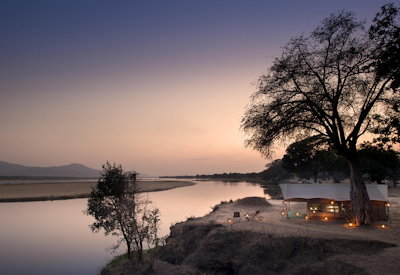
- Semi-mobile camp, rebuilt each season at a prime riverside site
- Canoeing on the Zambezi and tiger fishing
- Guided walking safaris in one of Africa's finest on-foot parks
- Game drives for elephant, lion, wild dog and buffalo
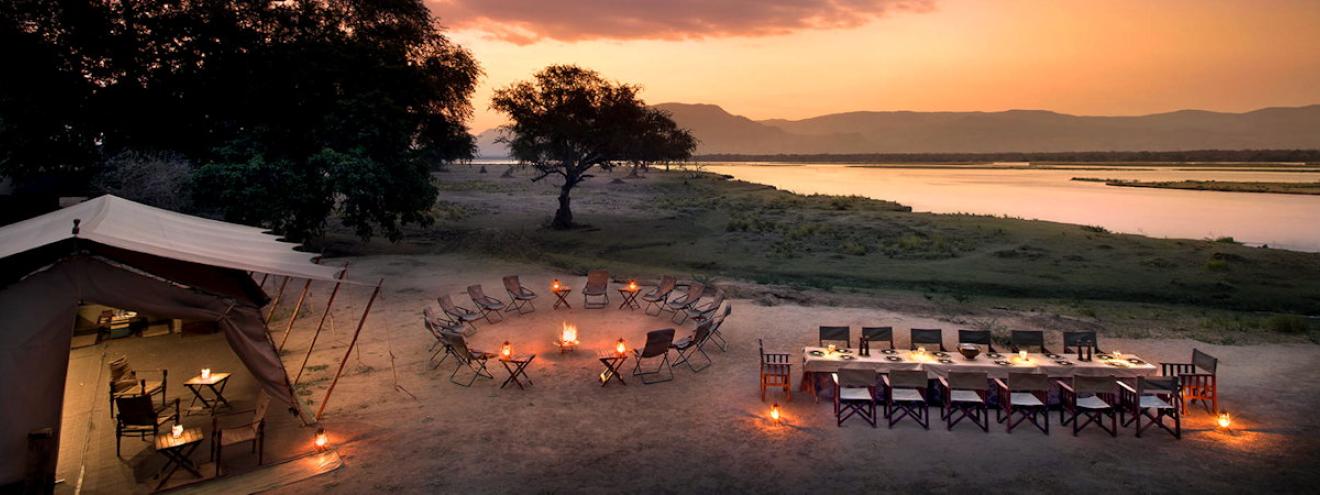
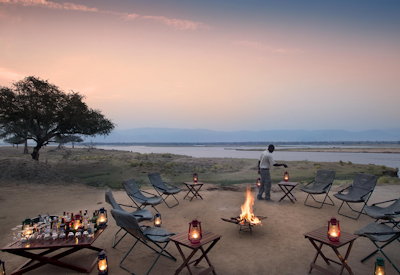
- Sundowners and evening drinks around the firepit
Information
- Lodge type: Semi-mobile tented safari camp, operated by African Bush Camps
- Location: Mana Pools National Park, Zimbabwe
- Lodge size: 6 Meru-style tents
- Recommended stay: 3–7 nights
- Malaria risk: Yes — Mana Pools National Park is a malaria area; antimalarial prophylaxis is recommended
- Getting there: Harare is the nearest gateway, 1 hour by light aircraft to the Mana Pools airstrip, then a 20-minute drive to camp; Victoria Falls and Hwange are each 2 hours by light aircraft
Expeditions Camp Offers A Exclusive And Remote Glamping Experience In The Mana Pools and Zambezi River
Zambezi Expeditions Camp is a six-tent, semi-mobile safari camp on the banks of the Zambezi River inside Mana Pools National Park, a UNESCO World Heritage Site in northern Zimbabwe. African Bush Camps operates it and rebuilds it each season at a different riverside site. The camp is built for travellers who will trade a few comforts for some of the most thrilling wildlife encounters in Africa: canoeing past hippo pods, walking with a professional guide among elephant and buffalo, and watching wild dog hunt across the floodplain.
Zambezi Expeditions Camp is a classic safari in the truest sense. Nights are spent around the firepit with fellow travellers, lions call from across the river, and elephants stand on their hind legs to reach the Ana tree pods. It is the Zambezi Valley as it has always been: wild, open and utterly unforgettable.
Note: Open 1 April to 30 November; closed December to March for the rains.
Rooms and Suites
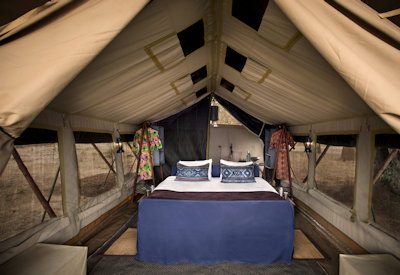
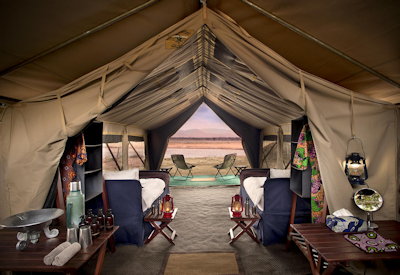
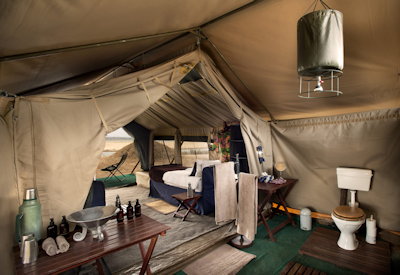
Zambezi Expeditions Camp has six Meru-style safari tents. Each has comfortable beds, a flush toilet and an open-air bucket shower filled with hot water on request. The tents stand on the edge of the Zambezi floodplain, and wildlife walks freely between them. Guests are escorted after dark, and the camp accepts children aged 12 and over only.
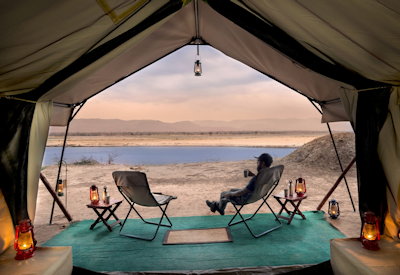
Zambezi Expeditions Camp keeps its styling deliberately simple. Crisp linen, canvas and a verandah facing the river are all you need when the view is this good. It is a beautifully executed return to the classic safari of yesteryear.
Cuisine and Wine
Zambezi Expeditions Camp serves breakfast, lunch and dinner cooked fresh in a bush kitchen, which is remarkable given how remote the camp is. Meals are served in the mess tent, under the trees or beside the firepit. Soft drinks, beer, house wine and local spirits are included; premium imported spirits and champagne are extra.
Facilities
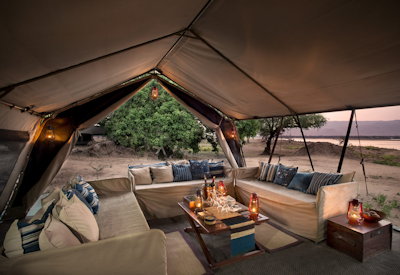
Zambezi Expeditions Camp offers the essentials and nothing more. The mess tent holds a small lounge and dining area, and outside there is an open-air dining deck and firepit. Power is solar with a backup generator. There are no plug sockets in the tents, so devices are charged in the main area. There is no guest Wi-Fi, and the cellphone signal is patchy. Laundry is included.
Activities
Zambezi Expeditions Camp offers canoeing on the Zambezi River, guided walking safaris, morning and afternoon game drives, tiger fishing, birdwatching and photography. All of them take place in Mana Pools National Park, one of the few national parks in Africa where guests can explore on foot. Walking safaris and canoe trips are open to guests aged 16 and over.
Game drives in open 4x4 vehicles cover the floodplain and the woodland. Expect elephant, lion, wild dog, buffalo, eland, kudu and waterbuck, often framed by the Ana trees (Faidherbia albida) and mahogany of the riverine forest.
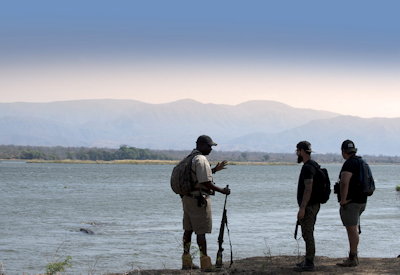
Walking safaris with a qualified professional guide are the signature experience at Mana Pools. On foot, every track, bird call and rustle becomes part of the story.
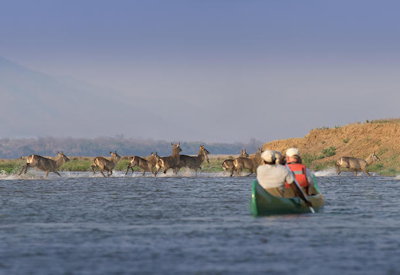
Canoeing lets you see the Zambezi from water level, gliding past hippo, crocodile and elephant feeding on the islands. Tiger fishing is available for anglers who want to test themselves against one of Africa's great game fish.
Zambezi Expeditions Camp FAQs
Where is Zambezi Expeditions Camp?
Zambezi Expeditions Camp is a six-tent, semi-mobile safari camp on the banks of the Zambezi River inside Mana Pools National Park, a UNESCO World Heritage Site in northern Zimbabwe on the border with Zambia. African Bush Camps operates the camp and rebuilds it each season at riverside sites along the floodplain. Guests arrive on a one-hour light-aircraft flight from Harare, followed by a 20-minute drive from the airstrip.
When is Zambezi Expeditions Camp open?
Zambezi Expeditions Camp in Mana Pools National Park is open from 1 April to 30 November and closes from December to March for the rains. The best game viewing is from June to October, when the dry season draws elephant, buffalo, lion and wild dog to the Zambezi floodplain. April and May are greener, quieter and excellent for birding.
Is Mana Pools National Park malaria-free?
Mana Pools National Park, home to Zambezi Expeditions Camp, is not malaria-free; the Zambezi Valley is a malaria risk area. Before travelling, guests should ask a travel doctor about antimalarial prophylaxis. At camp, use insect repellent and wear long sleeves after dark. The nearest doctor is in Kariba, several hours away, so travel insurance with medical evacuation cover is essential.
Can children stay at Zambezi Expeditions Camp?
Zambezi Expeditions Camp in Mana Pools National Park accepts children aged 12 and over. Younger children are not accepted because wildlife walks freely through the unfenced camp. Walking safaris and canoe trips on the Zambezi River are limited to guests aged 16 and over, so families with younger teenagers should plan around game drives, fishing and birdwatching. Private activities can be arranged for family groups.
What activities are offered at Zambezi Expeditions Camp?
Zambezi Expeditions Camp offers canoeing on the Zambezi River, guided walking safaris, game drives in open 4x4 vehicles, tiger fishing and birdwatching in Mana Pools National Park. Walking is the signature experience: Mana Pools is one of the few African national parks where guests may explore on foot with a qualified guide. Morning and afternoon game drives and walks are included in the rate.
In Conclusion
Zambezi Expeditions Camp is the right choice for travellers who want Mana Pools the way it should be experienced: on foot, by canoe and under canvas, with nothing between them and the Zambezi except a zip. There are six tents, a camp that moves to the best riverside site each season, and one of the finest walking parks in Africa on the doorstep. It is an intimate, wild and thoroughly authentic safari.
When to go: the camp is open from April to November. The dry months from June to October give the most dramatic game viewing, with elephant, wild dog and lion concentrated along the river. April and May are greener and quieter.
How to book: Uyaphi.com has planned African safaris since 1999, which gives us 27 years of experience matching travellers to the right camps, the right seasons and the right light-aircraft connections. We combine Zambezi Expeditions Camp with Victoria Falls, Hwange or a second Mana Pools camp to build a seamless Zimbabwe safari, with no booking fees and no credit card surcharges. Send us your dates below, and we'll put together your Mana Pools adventure.
Rates form part of a safari itinerary
Zambezi Expeditions Camp
Per person per night sharing
Rates are in US Dollar
*Rates may vary according to season
- Accommodation
- All meals
- Tea, coffee, soft drinks, and alcoholic beverages
- Laundry
- Morning and afternoon game drives
- Walking safaris
- Premium imported spirits and champagne
- Visa Fees
- International and regional Flights
- Travel Insurance
- Items of a personal nature
- Staff gratuities
Book This Zimbabwe Lodge Now
Zimbabwe Travel Topics
The Perfect Zimbabwe Honeymoon
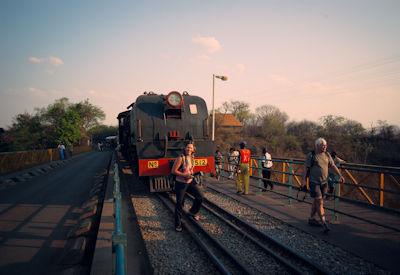
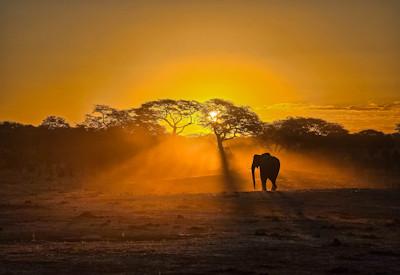
Most honeymoons are an exercise in doing very little at considerable expense, and there is a great deal to be said for that. Zimbabwe simply arranges better company for it. Elephants come down to drink below the deck while you are still on your first coffee; the guide turns out to know which lion crossed the airstrip in the night; dinner happens on a Zambezi deck while the light goes orange and then goes altogether. Nobody puts Zimbabwe at the top of the shortlist — Kenya and the Cape get there first — which is precisely why the lodges are quieter and the guiding is better than it needs to be.
Top 10 Must See Attractions In Victoria Falls
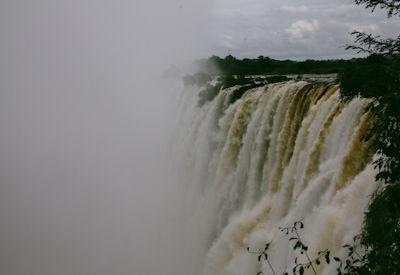
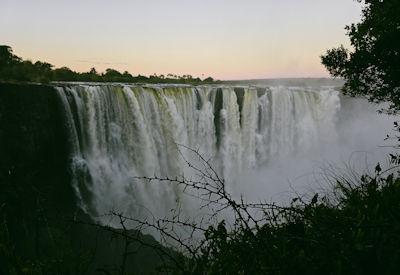
Livingstone named it after a queen who never saw it, and the Tonga had been calling it Mosi-oa-Tunya, the smoke that thunders, for a very long time before he turned up. Theirs is the better name. Five hundred million litres a minute go over the edge in full flood, which is enough to soak you through a hired raincoat before you are halfway along the Zimbabwe footpath, and enough to hide the falls entirely if you have come in the wrong month. There is also a rock pool at the very lip of the drop that people swim in. We will come to that.
5 Best Lodges In Victoria Falls
You can see the falls properly in ninety minutes. The rest of the week happens wherever you are sleeping, which makes the choice of lodge matter more here than almost anywhere else in Zimbabwe. Some of them are town hotels with a shuttle and a buffet. Others sit far enough upriver that the loudest thing at breakfast is one hippo disagreeing with another. The gap in price between those two experiences is usually smaller than you would expect, and the gap in the holiday is not. Here are five I would put my own money on.
10 Reasons To Visit The Zambezi River
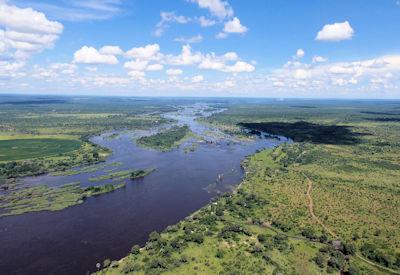
The Zambezi begins as a spring in a patch of Zambian woodland you could step across, and ends two and a half thousand kilometres later in the Indian Ocean, having spent much of the journey acting as the border of half of southern Africa. Six countries. One waterfall that needs no introduction, a dam that made an inland sea, and a stretch below that dam at Mana Pools where you are permitted to walk. It is also, at six in the evening with the light going, the single best place in this part of the continent to be sitting still.
Luxury Tented Safari Camps in Zimbabwe
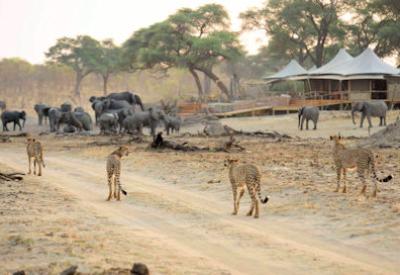
"Tent" is a word working extremely hard in this part of the brochure. It covers canvas on a hardwood deck with a four-poster and plumbing that would pass in Kensington, and it also covers a bucket shower and a zip. What the two share is the actual reason to choose either: canvas does not keep sound out. You hear the elephants arrive at the Hwange waterhole at two in the morning. You hear the hippos settling their differences on the Zambezi. You lie there listening rather than sleeping, which is rather the point of the whole arrangement.
10 Reasons To Visit The Hwange National Park
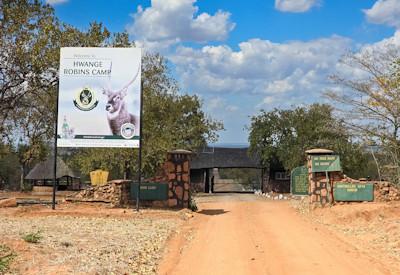
Hwange should not really work. Most of it sits on Kalahari sand with no permanent river anywhere near it, and the reason elephants stand shoulder to shoulder at Nyamandhlovu Pan in October is that somebody is running a diesel pump. That decision was taken in the 1920s by a warden named Ted Davison, and it has been kept up, more or less, ever since. Fourteen thousand square kilometres of managed thirst. The Big Five are all present on paper, though I would not build a holiday around seeing the rhino. The elephants are an entirely different proposition.
Zimbabwe Travel Bucket List
For most of the last century the Rhodesian authorities preferred to believe that Zimbabweans had not built Great Zimbabwe. Phoenicians were proposed. So were the Queen of Sheba's architects. The stonework is Shona, laid without mortar, eleven metres high in places, and it is the only ruin I can think of that gave its name to the country containing it. That is the sort of country this is. The obvious things — the falls, the Hwange elephants, the rapids below the gorge — are worth every hour of the flight, and underneath them sits a second Zimbabwe that most itineraries never touch.
10 Reasons to Visit Victoria Falls for an Unforgettable Experience
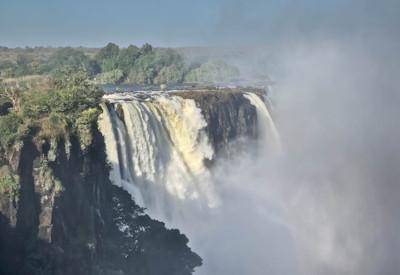
The bridge was cast in Darlington, shipped out in pieces and bolted together over the gorge in 1905, and people now jump off it on an elastic rope. Victoria Falls has been like this ever since: a serious piece of natural history with an adrenaline economy bolted to the side of it. You can run the grade five rapids in the Batoka Gorge in the morning and be on a boat with a gin and tonic by six, watching the same water arrive flat and innocent above the lip. Both are honest ways to spend a day here. So is doing neither.