
John's Camp
Highlights
- Guided walking safaris in Mana Pools National Park
- Canoeing the Zambezi River at eye level with elephant and hippo
- Sundowners on the riverbank and a star-bed sleep-out
- Outstanding photography on the Zambezi floodplain
- Knowledgeable, highly experienced Robin Pope Safaris guides
- A rustic, back-to-nature camp of just six tents
- Excellent dry-season game viewing, including wild dog
Information
- Lodge type: Seasonal tented safari camp (Robin Pope Safaris)
- Location: Mana Pools National Park, Zimbabwe
- Lodge size: 6 Meru-style tented suites, 12 guests maximum
- Recommended stay: 3–7 nights
- Malaria risk: Yes — Mana Pools is a malaria area; take antimalarial prophylaxis
- Getting there: 388 km north-west of Harare, 7–8 hours by 4x4; about 1 hour by light aircraft from Harare or 90 minutes from Victoria Falls, plus a 45-minute transfer from the Mana Pools airstrip
John's Is Located Within the Mana Pools National Park, A Safari Camp Offering An Authentic Experience
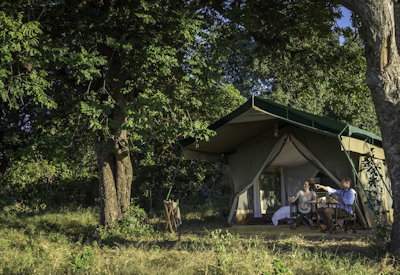
John's Camp is a six-tent seasonal safari camp run by Robin Pope Safaris on the banks of the Zambezi River in Mana Pools National Park, a UNESCO World Heritage Site in northern Zimbabwe. John's Camp is open from 1 May to 15 November, hosts no more than 12 guests at a time, and is built around the activity Mana Pools does better than almost anywhere in Africa: walking safaris.
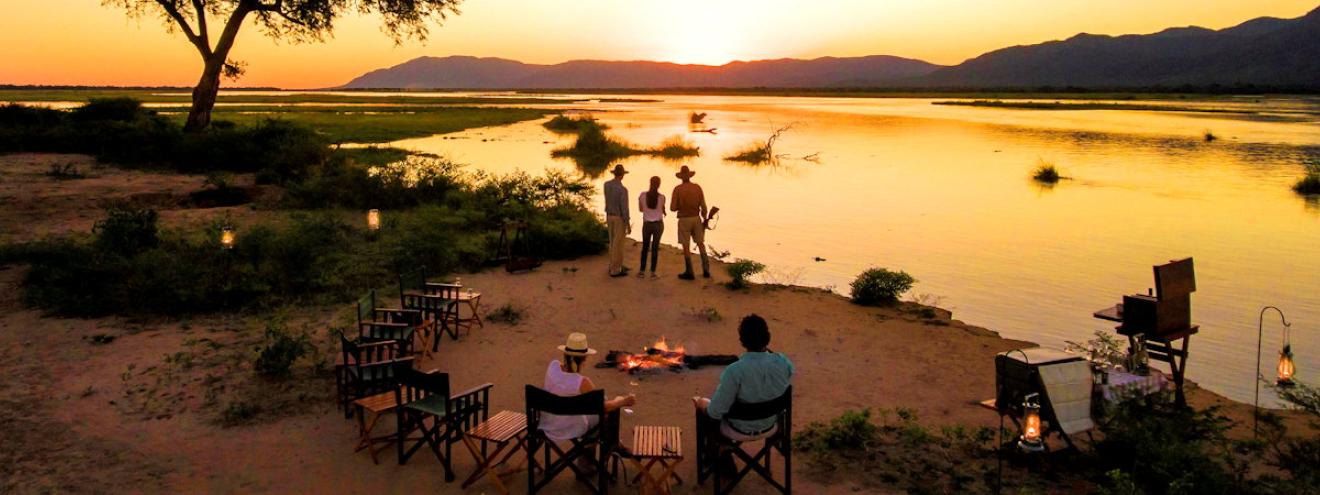
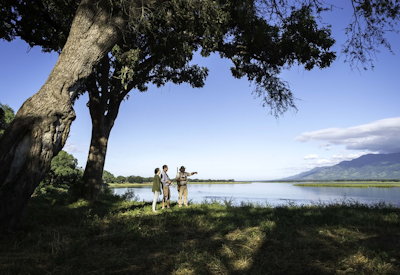
John's Camp sits beneath a canopy of Trichilia and mahogany trees, facing the Zambezi floodplain with the blue wall of the Zambezi Escarpment on the far horizon. Elephants wander between the tents, hippos grunt from the river through the night, and the only schedule is the one set by the wildlife. With a maximum of 12 guests, John's Camp is ideal for honeymooners, couples, photographers and small groups of friends who want Mana Pools at its most intimate and unhurried.
Rooms and Suites
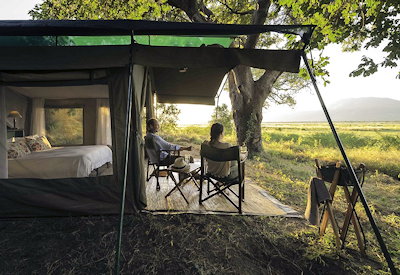
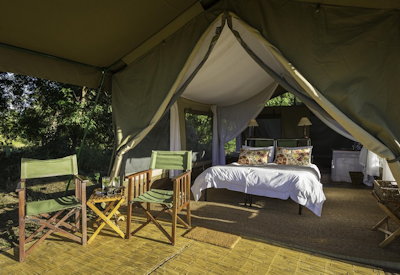
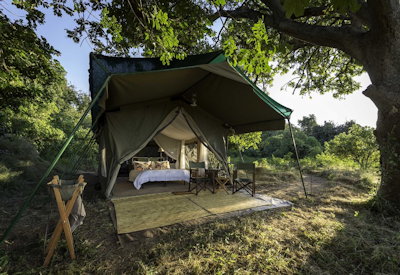
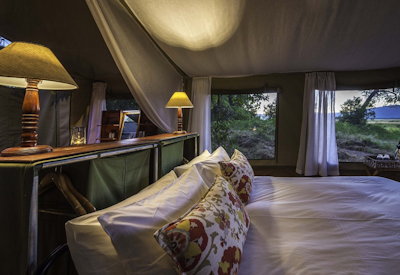
John's Camp has six Meru-style walk-in tents, each with comfortable double or twin bedding, solar reading lamps and an en-suite bathroom with a flush toilet and a hot-water safari bucket shower. The tents at John's Camp are spaced well apart for privacy, and every one looks out across the floodplain to the Zambezi River and the escarpment beyond — a view that changes from golden dawn light to deep purple dusk without you lifting a finger.
Cuisine and Wine
John's Camp serves three freshly prepared meals a day, and local drinks are included in the rate. The kitchen team at John's Camp produces food of a standard that is frankly remarkable for a canvas camp this remote, served around a communal table where the day's sightings are retold and embellished. Bush breakfasts and lunches out in the park are a highlight. Most dietary requirements can be catered for; the exception is severe nut allergies, which John's Camp cannot accommodate.
Facilities
John's Camp keeps its central area deliberately simple: a lounge under canvas, indoor and outdoor dining areas and a fire pit — and that is the whole point. A stay at John's Camp is not about the camp; it is about where you are, and what you see, smell, hear and photograph there. There is no mobile phone signal and no WiFi in the tents, though there are charging stations for cameras and devices in the main area. Laundry is included. Children aged 12 and over are welcome; younger children only by prior arrangement.
Activities
John's Camp offers walking safaris, game drives, canoeing, catch-and-release fishing and birdwatching, with two guided activities a day included in the rate. Every activity at John's Camp is led by professional, highly experienced guides and trackers, and the choice of morning or afternoon outing is yours.
Walking safaris are the reason to come to Mana Pools, and John's Camp does them superbly — tracking on foot across the open floodplain, closing in on elephant, buffalo and lion with nothing between you and the animal but a guide's skill. Game drives in 4x4 Toyota Land Cruisers cover more ground, particularly in the dry season when wildlife concentrates along the river. Canoeing, introduced in 2024, puts you at water level with hippo, crocodile and elephants drinking at the bank — a slower, quieter, utterly absorbing way to see the Zambezi. Anglers can try for tigerfish on a catch-and-release basis, and the star-bed sleep-out platform offers two guests a night in the open under an extraordinary sky. Night drives are not permitted in this area of Mana Pools National Park.
John's Camp Mana Pools — Frequently Asked Questions
Where is John's Camp and how do you get there?
John's Camp is a seasonal Robin Pope Safaris tented camp on the banks of the Zambezi River inside Mana Pools National Park, a UNESCO World Heritage Site in northern Zimbabwe, about 388 km north-west of Harare. Most guests fly in by light aircraft — roughly one hour from Harare or 90 minutes from Victoria Falls — followed by a 45-minute transfer from the Mana Pools airstrip. The road journey takes 7–8 hours by 4x4.
When is John's Camp open, and when is the best time to go?
John's Camp opens on 1 May and closes on 15 November each year, packing up for the rainy season. The best game viewing at John's Camp runs from August to October, when the Mana Pools floodplain dries out and elephant, buffalo, lion and wild dog concentrate near the Zambezi River. May to July is cooler and greener; October is the hottest month, with daytime temperatures often above 40°C.
Is there malaria at John's Camp in Mana Pools?
Yes. John's Camp lies in Mana Pools National Park in Zimbabwe's Zambezi Valley, which is a malaria area, and antimalarial medication is recommended for every guest. See a travel clinic or doctor six to eight weeks before departure to choose the right prophylaxis. Long sleeves and trousers at dusk and a good insect repellent add further protection in the evenings at camp.
What activities are offered at John's Camp?
John's Camp offers guided walking safaris, game drives in 4x4 Toyota Land Cruisers, canoeing on the Zambezi River (introduced in 2024), catch-and-release tigerfish fishing, birdwatching and bush breakfasts, with two activities a day included in the rate. John's Camp also has a star-bed sleep-out platform for two guests. Night drives are not permitted in this part of Mana Pools National Park.
Can children stay at John's Camp?
John's Camp welcomes children aged 12 and over. Younger children may stay only by prior arrangement with Robin Pope Safaris, usually on an exclusive booking of the whole camp. Walking and canoeing safaris in Mana Pools National Park bring guests close to elephant, buffalo and hippo, so the age limit is set for safety. Families with younger children should ask about exclusive-use options.
Does John's Camp have WiFi or phone signal?
John's Camp has no mobile phone signal and no WiFi in the guest tents — a deliberate part of the experience in remote Mana Pools National Park, Zimbabwe. Charging stations for cameras and phones are available in the main guest area. Guests staying at John's Camp should plan to be largely offline for the three to seven nights typically recommended for a visit.
In Conclusion
John's Camp is the camp for travellers who want Mana Pools National Park as it should be experienced: on foot, on the water and without distraction. Six tents on the Zambezi, a 12-guest limit and some of the finest walking guides in Africa add up to one of Zimbabwe's most authentic safari experiences — no frills, no crowds, just the floodplain, the elephants and the escarpment turning pink at sundown.
The best time to go is August to October for peak game viewing, or May to July for cooler days and quieter tracks, and John's Camp fills early for the dry season. We recommend three nights at the very least, and a stay of four to five nights lets the walking safaris really come into their own. John's Camp pairs beautifully with Victoria Falls, Hwange National Park or Lake Kariba on a Zimbabwe itinerary, and we'll handle every light-aircraft connection in between.
Uyaphi.com has been planning tailor-made African safaris from Cape Town since 1999 — 27 years of matching the right traveller to the right camp. We charge no booking fees and no credit card surcharges. Tell us your dates and what you dream of seeing, and we'll build your Mana Pools safari around John's Camp using the form below.
Rates form part of a safari itinerary
John's Camp Rates
Per person per night sharing
Rates are in US Dollar
*Rates may vary according to season
- Accommodation
- All meals
- Laundry
- Local drinks
- Two game viewing activities per day
- Transfers to/from Mana Main and Mana West airstrip
- Visas
- Flights
- Premium drinks
- Park fees and taxes
- Transfers in and out of Mana
- Travel insurance
- Items of a personal nature
- Gratuities
Book This Zimbabwe Lodge Now
Zimbabwe Travel Topics
The Perfect Zimbabwe Honeymoon
Most honeymoons are an exercise in doing very little at considerable expense, and there is a great deal to be said for that. Zimbabwe simply arranges better company for it. Elephants come down to drink below the deck while you are still on your first coffee; the guide turns out to know which lion crossed the airstrip in the night; dinner happens on a Zambezi deck while the light goes orange and then goes altogether. Nobody puts Zimbabwe at the top of the shortlist — Kenya and the Cape get there first — which is precisely why the lodges are quieter and the guiding is better than it needs to be.
Top 10 Must See Attractions In Victoria Falls
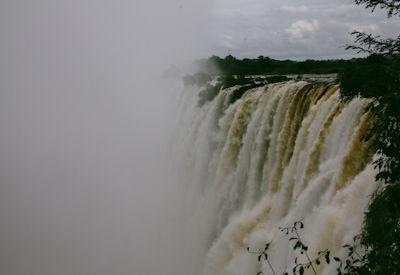
Livingstone named it after a queen who never saw it, and the Tonga had been calling it Mosi-oa-Tunya, the smoke that thunders, for a very long time before he turned up. Theirs is the better name. Five hundred million litres a minute go over the edge in full flood, which is enough to soak you through a hired raincoat before you are halfway along the Zimbabwe footpath, and enough to hide the falls entirely if you have come in the wrong month. There is also a rock pool at the very lip of the drop that people swim in. We will come to that.
5 Best Lodges In Victoria Falls
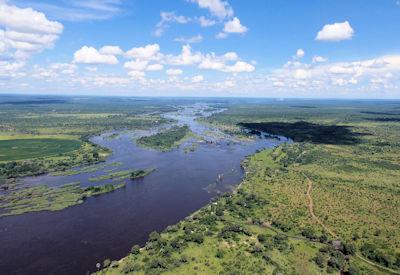
You can see the falls properly in ninety minutes. The rest of the week happens wherever you are sleeping, which makes the choice of lodge matter more here than almost anywhere else in Zimbabwe. Some of them are town hotels with a shuttle and a buffet. Others sit far enough upriver that the loudest thing at breakfast is one hippo disagreeing with another. The gap in price between those two experiences is usually smaller than you would expect, and the gap in the holiday is not. Here are five I would put my own money on.
10 Reasons To Visit The Zambezi River
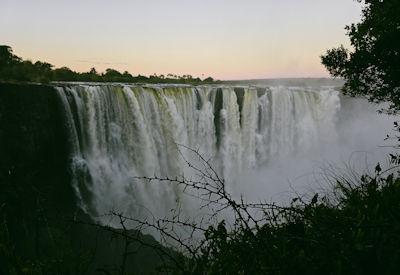
The Zambezi begins as a spring in a patch of Zambian woodland you could step across, and ends two and a half thousand kilometres later in the Indian Ocean, having spent much of the journey acting as the border of half of southern Africa. Six countries. One waterfall that needs no introduction, a dam that made an inland sea, and a stretch below that dam at Mana Pools where you are permitted to walk. It is also, at six in the evening with the light going, the single best place in this part of the continent to be sitting still.
Luxury Tented Safari Camps in Zimbabwe
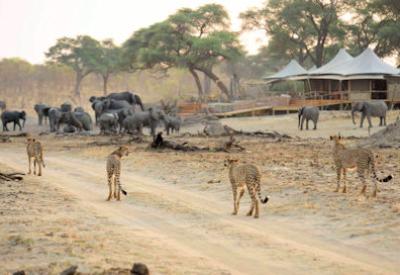
"Tent" is a word working extremely hard in this part of the brochure. It covers canvas on a hardwood deck with a four-poster and plumbing that would pass in Kensington, and it also covers a bucket shower and a zip. What the two share is the actual reason to choose either: canvas does not keep sound out. You hear the elephants arrive at the Hwange waterhole at two in the morning. You hear the hippos settling their differences on the Zambezi. You lie there listening rather than sleeping, which is rather the point of the whole arrangement.
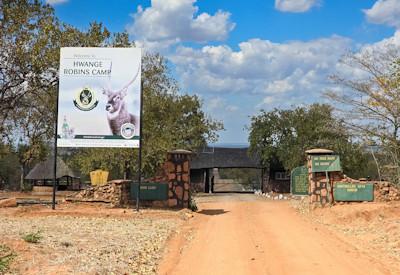
10 Reasons To Visit The Hwange National Park
Hwange should not really work. Most of it sits on Kalahari sand with no permanent river anywhere near it, and the reason elephants stand shoulder to shoulder at Nyamandhlovu Pan in October is that somebody is running a diesel pump. That decision was taken in the 1920s by a warden named Ted Davison, and it has been kept up, more or less, ever since. Fourteen thousand square kilometres of managed thirst. The Big Five are all present on paper, though I would not build a holiday around seeing the rhino. The elephants are an entirely different proposition.
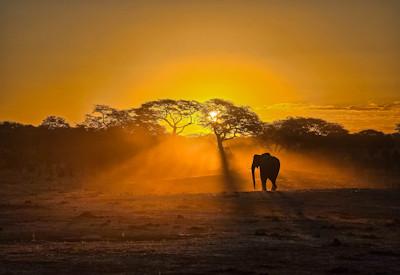
Zimbabwe Travel Bucket List
For most of the last century the Rhodesian authorities preferred to believe that Zimbabweans had not built Great Zimbabwe. Phoenicians were proposed. So were the Queen of Sheba's architects. The stonework is Shona, laid without mortar, eleven metres high in places, and it is the only ruin I can think of that gave its name to the country containing it. That is the sort of country this is. The obvious things — the falls, the Hwange elephants, the rapids below the gorge — are worth every hour of the flight, and underneath them sits a second Zimbabwe that most itineraries never touch.
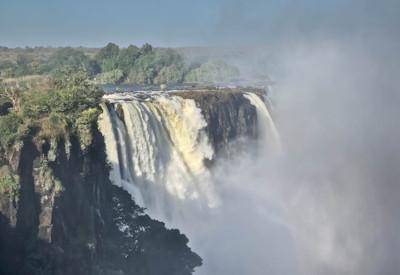
10 Reasons to Visit Victoria Falls for an Unforgettable Experience
The bridge was cast in Darlington, shipped out in pieces and bolted together over the gorge in 1905, and people now jump off it on an elastic rope. Victoria Falls has been like this ever since: a serious piece of natural history with an adrenaline economy bolted to the side of it. You can run the grade five rapids in the Batoka Gorge in the morning and be on a boat with a gin and tonic by six, watching the same water arrive flat and innocent above the lip. Both are honest ways to spend a day here. So is doing neither.