Uyaphi.com
African Safaris and Tours


Malaria is present across much of Zimbabwe, and the level of risk depends on two things: altitude and season. Below 1,200 metres the risk is high from November to June, through the hot, wet summer and into autumn, and low from July to October. The Zambezi Valley is the exception. Victoria Falls, Lake Kariba and Mana Pools carry a risk all year round. Harare and Bulawayo sit higher and are very low risk, but they are not risk-free.
As a general rule, treat the whole country as a malaria area and plan precautions into every safari itinerary.
Always consult your doctor, pharmacist or a travel clinic before travelling to a malaria area. This page is a guide only, and conditions change.
Our Malaria in Africa page covers the disease itself in more detail.
The map below shows where malaria occurs in Zimbabwe. Some regions carry a higher risk than others, but for planning purposes treat the entire country as a malaria destination.

Most of Zimbabwe carries some malaria risk, and the level depends on altitude and season. Areas below 1,200 metres are high risk from November to June, the Zambezi Valley is at risk all year, and Harare and Bulawayo are very low risk. For planning purposes, treat the whole country as a malaria area.
Malaria season in Zimbabwe runs from November to June, covering the hot, wet summer and the months after the rains. Below 1,200 metres the risk is high in those months and low from July to October. The Zambezi Valley is different: there the risk continues year-round, so the dry winter months are not malaria-free.
Yes, antimalarials are advised for Victoria Falls in every month of the year. The town and the falls lie in the Zambezi Valley, where malaria transmission does not stop in the dry season. Speak to your doctor or a travel clinic about prophylaxis before you leave, and use insect repellent from dusk to dawn.
Yes, all three are malaria areas. Mana Pools and Lake Kariba sit in the Zambezi Valley, where the risk runs all year. Hwange lies below 1,200 metres, so it falls in the high-risk band from November to June, with a lower risk from July to October. Gonarezhou, in the south-eastern lowveld, follows the same seasonal pattern.
No, Harare and Bulawayo are very low risk rather than malaria-free. Both cities sit above 1,200 metres, yet cases have been reported during the November-to-June season. Antimalarials are often not needed for a city-only stay, but bite avoidance still matters, and most itineraries continue on to higher-risk parks anyway.
UK travel-health guidance lists atovaquone-proguanil, doxycycline or mefloquine for Zimbabwe's malaria risk areas. Each differs in cost, side effects and how long you keep taking it after leaving, so the choice is made with your doctor or travel clinic, not by us. Start the course before you arrive, exactly as prescribed.
Get tested for malaria straight away and tell the doctor you have been in Zimbabwe. Symptoms usually begin with a fever of 38°C or more, often with chills, headache or aching muscles, and can appear anywhere from eight days to a year after the bite. Malaria can worsen quickly, so treat any fever as urgent.
Most honeymoons are an exercise in doing very little at considerable expense, and there is a great deal to be said for that. Zimbabwe simply arranges better company for it. Elephants come down to drink below the deck while you are still on your first coffee; the guide turns out to know which lion crossed the airstrip in the night; dinner happens on a Zambezi deck while the light goes orange and then goes altogether. Nobody puts Zimbabwe at the top of the shortlist — Kenya and the Cape get there first — which is precisely why the lodges are quieter and the guiding is better than it needs to be.
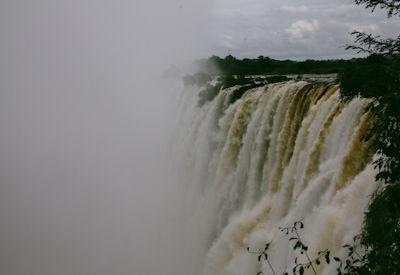
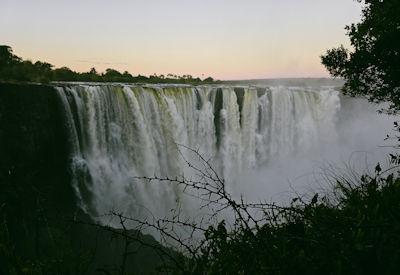
Livingstone named it after a queen who never saw it, and the Tonga had been calling it Mosi-oa-Tunya, the smoke that thunders, for a very long time before he turned up. Theirs is the better name. Five hundred million litres a minute go over the edge in full flood, which is enough to soak you through a hired raincoat before you are halfway along the Zimbabwe footpath, and enough to hide the falls entirely if you have come in the wrong month. There is also a rock pool at the very lip of the drop that people swim in. We will come to that.
You can see the falls properly in ninety minutes. The rest of the week happens wherever you are sleeping, which makes the choice of lodge matter more here than almost anywhere else in Zimbabwe. Some of them are town hotels with a shuttle and a buffet. Others sit far enough upriver that the loudest thing at breakfast is one hippo disagreeing with another. The gap in price between those two experiences is usually smaller than you would expect, and the gap in the holiday is not. Here are five I would put my own money on.
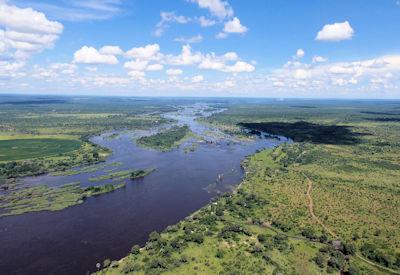
The Zambezi begins as a spring in a patch of Zambian woodland you could step across, and ends two and a half thousand kilometres later in the Indian Ocean, having spent much of the journey acting as the border of half of southern Africa. Six countries. One waterfall that needs no introduction, a dam that made an inland sea, and a stretch below that dam at Mana Pools where you are permitted to walk. It is also, at six in the evening with the light going, the single best place in this part of the continent to be sitting still.
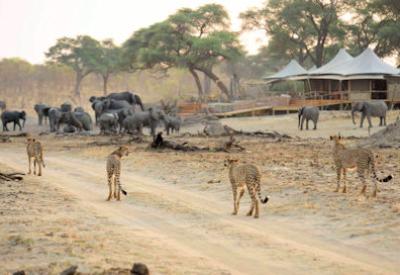
"Tent" is a word working extremely hard in this part of the brochure. It covers canvas on a hardwood deck with a four-poster and plumbing that would pass in Kensington, and it also covers a bucket shower and a zip. What the two share is the actual reason to choose either: canvas does not keep sound out. You hear the elephants arrive at the Hwange waterhole at two in the morning. You hear the hippos settling their differences on the Zambezi. You lie there listening rather than sleeping, which is rather the point of the whole arrangement.
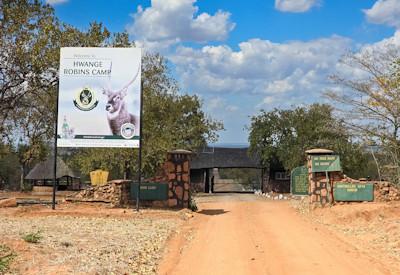
Hwange should not really work. Most of it sits on Kalahari sand with no permanent river anywhere near it, and the reason elephants stand shoulder to shoulder at Nyamandhlovu Pan in October is that somebody is running a diesel pump. That decision was taken in the 1920s by a warden named Ted Davison, and it has been kept up, more or less, ever since. Fourteen thousand square kilometres of managed thirst. The Big Five are all present on paper, though I would not build a holiday around seeing the rhino. The elephants are an entirely different proposition.
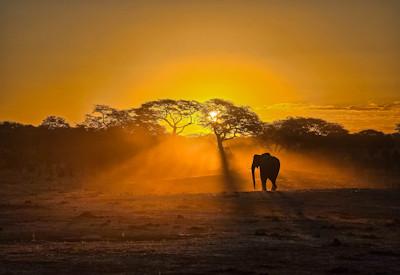
For most of the last century the Rhodesian authorities preferred to believe that Zimbabweans had not built Great Zimbabwe. Phoenicians were proposed. So were the Queen of Sheba's architects. The stonework is Shona, laid without mortar, eleven metres high in places, and it is the only ruin I can think of that gave its name to the country containing it. That is the sort of country this is. The obvious things — the falls, the Hwange elephants, the rapids below the gorge — are worth every hour of the flight, and underneath them sits a second Zimbabwe that most itineraries never touch.
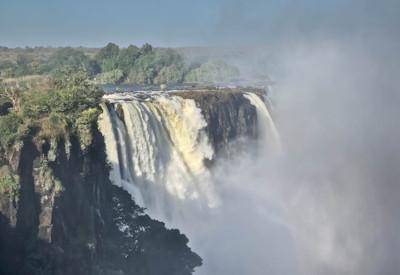
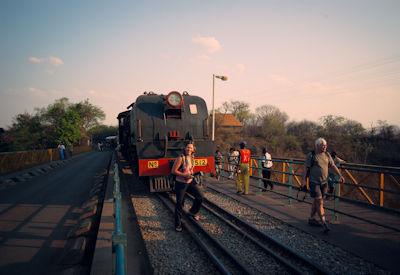
The bridge was cast in Darlington, shipped out in pieces and bolted together over the gorge in 1905, and people now jump off it on an elastic rope. Victoria Falls has been like this ever since: a serious piece of natural history with an adrenaline economy bolted to the side of it. You can run the grade five rapids in the Batoka Gorge in the morning and be on a boat with a gin and tonic by six, watching the same water arrive flat and innocent above the lip. Both are honest ways to spend a day here. So is doing neither.